LGP-26-B3 (Fern Rhizome + Onion Peel)
 Jun 02, 2026 • 10:19 AM UTC
 India
India 140x Magnification
 Plants
Jhalak Jain
Learn about the author...
3posts
1comments
0locations

View in Media Gallery
FERN RHIZOME
Opening our Foldscopes for the first time was exciting, we were really ecstatic to see what we would be learning about for the next 5 days and trust me when I say our expectations were met. After learning about all the parts of the Foldscope and learning how to use it. We started our session with an experiment on Fern Rhizome.
Once I looked through the foldscope and I observed that the fern rhizome appeared as a circular structure under the folscope,the outer layer was covered by an epidermis that protected the internal tissues. The rhizome showed adaptation for storage of food and transport of water and nutrients. We looked at the Rhizome at different zoom levels like 50x, 140x, and 340x. The rings were stained white blue and red which made it extremely clear and helped us make an accurate observation.
Opening our Foldscopes for the first time was exciting, we were really ecstatic to see what we would be learning about for the next 5 days and trust me when I say our expectations were met. After learning about all the parts of the Foldscope and learning how to use it. We started our session with an experiment on Fern Rhizome.
Once I looked through the foldscope and I observed that the fern rhizome appeared as a circular structure under the folscope,the outer layer was covered by an epidermis that protected the internal tissues. The rhizome showed adaptation for storage of food and transport of water and nutrients. We looked at the Rhizome at different zoom levels like 50x, 140x, and 340x. The rings were stained white blue and red which made it extremely clear and helped us make an accurate observation.

View in Media Gallery
The fern rhizome showed complex plant tissue organization, including vascular bundles for transport, the fern rhizome showed the presence of well-organized plant tissues, including vascular bundles containing xylem and phloem. These tissues help in the transport of water, minerals, and food throughout the plant. The observation demonstrated that the rhizome acts as an underground stem that provides support, storage, and conduction of materials in the fern.
ONION PEEL
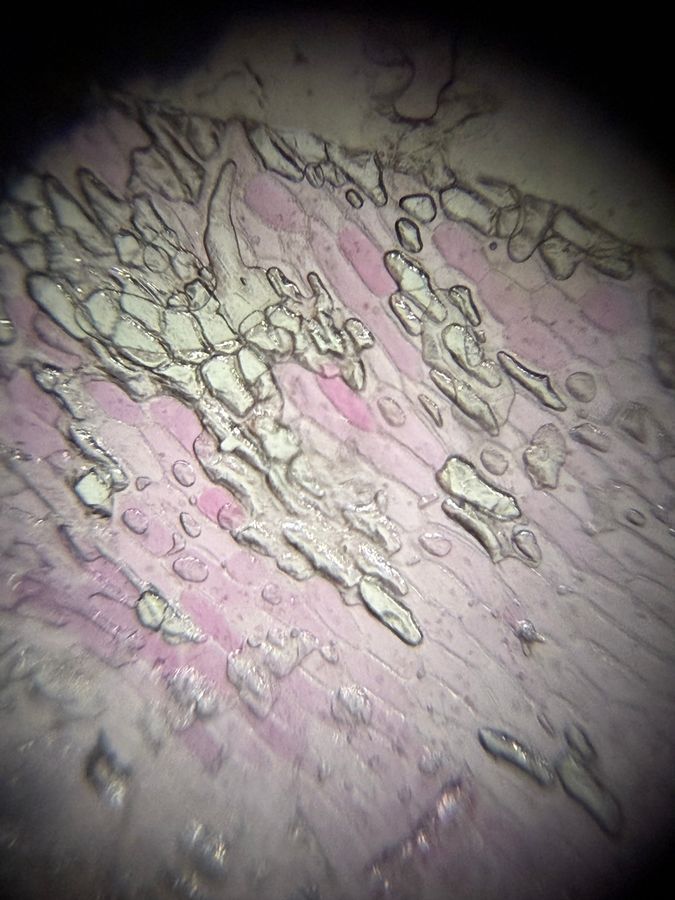
After carefully tearing out a small piece of the onion peel, we place it on our slate and observe the cells. The onion peel consisted of many rectangular, brick-like cells arranged in rows, cell walls were clearly visible and formed distinct boundaries between cells.
The cells were tightly packed with almost no spaces between them.
ONION PEEL
After carefully tearing out a small piece of the onion peel, we place it on our slate and observe the cells. The onion peel consisted of many rectangular, brick-like cells arranged in rows, cell walls were clearly visible and formed distinct boundaries between cells.
The cells were tightly packed with almost no spaces between them.
View in Media Gallery
This experiment showed that plants are composed of several organised cells that carry out vital life processes and aided in understanding the structure and properties of plant cells.
Sign in to commentNobody has commented yet... Share your thoughts with the author and start the discussion!

 0 Applause
 0 Comments