Foldscope Lab Extension: Human Body Systems & Plant Cells (7th Grade)
 Apr 30, 2026 • 7:41 PM UTC
 United States
 140x Magnification
 Animals
LaQuasha Hall
Learn about the author...
2posts
0comments
0locations
View in Media Gallery
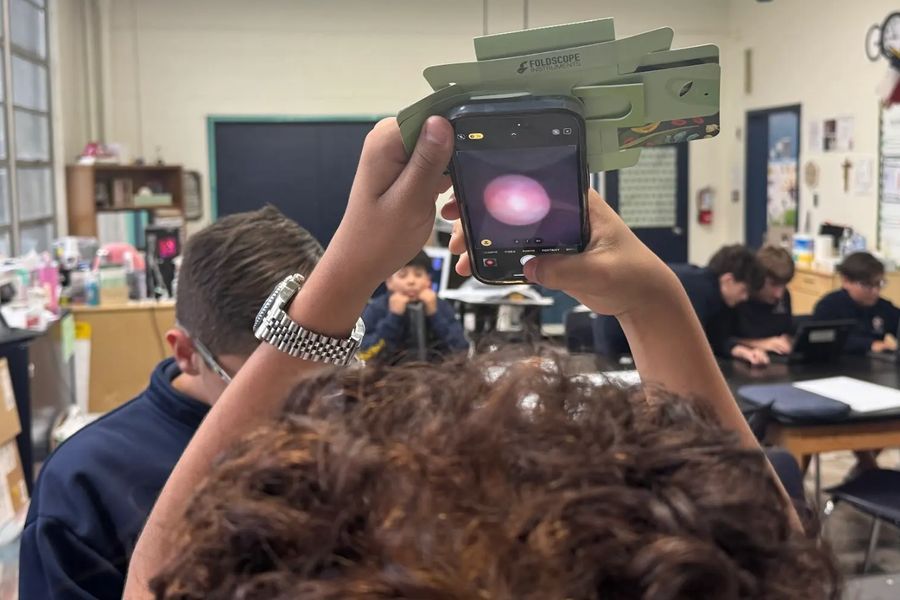
In our 7th grade science classes, students used Foldscopes as an extension to our dissection unit to deepen their understanding of the levels of organization in living systems. After exploring organs and tissues through hands-on dissections, students transitioned to examining cells—the foundational level of organization.
Using Foldscopes, students observed prepared slides of plant cells and compared them to their knowledge of human (animal) cells. This activity allowed students to make direct connections between cell structure and function, reinforcing how cells form tissues, tissues form organs, and organs work together within body systems.
Students demonstrated strong engagement as they identified key structures such as cell walls, chloroplasts, and cell membranes in plant cells, while discussing similarities and differences with human cells. The Foldscope experience provided a meaningful, hands-on opportunity to bridge microscopic cell structures with the larger systems studied during dissections.
This lab extension strengthened student understanding of biological organization and increased confidence in using scientific tools, while promoting inquiry, observation, and critical thinking.
Using Foldscopes, students observed prepared slides of plant cells and compared them to their knowledge of human (animal) cells. This activity allowed students to make direct connections between cell structure and function, reinforcing how cells form tissues, tissues form organs, and organs work together within body systems.
Students demonstrated strong engagement as they identified key structures such as cell walls, chloroplasts, and cell membranes in plant cells, while discussing similarities and differences with human cells. The Foldscope experience provided a meaningful, hands-on opportunity to bridge microscopic cell structures with the larger systems studied during dissections.
This lab extension strengthened student understanding of biological organization and increased confidence in using scientific tools, while promoting inquiry, observation, and critical thinking.
Sign in to commentNobody has commented yet... Share your thoughts with the author and start the discussion!
 0 Applause
 0 Comments