Creating a Foldscope Slide with High Scientific Value
 Mar 21, 2025 • 6:56 AM UTC
 India
India 140x Magnification
 Unknown
Avanish Utsav
Adding experiences to STEM Education | Works @ Tata Institute of Social Sciences | STEM Training Facilitator X, Insta, Linkedin @avanishutsav
4posts
2comments
3locations
View in Media Gallery
Proper documentation on a Foldscope slide is crucial for ensuring its reproducibility, and meaningful analysis. Without clear labeling, valuable observations may be lost, misinterpreted, or difficult to compare. A well-documented slide can allow researchers to track sample origins, observe trends, and share findings with others bringing more structure to the process.
Here are the list of things that you should consider adding on your slide.
Date & Time – When the sample was collected or observed.
Location – The specific place where the sample was collected (e.g., city, village, forest, beach, lab, etc.).
Sample Name / Type – The biological or material name of the sample (e.g., "Glass Krill," "Blood Clot," "Fungi Spores").
Scientific Name (if known) – The proper scientific classification of the sample.
Sample Source / Habitat – Whether it was collected from soil, water, blood, plant, marine life, etc.
Observation Notes – Any specific findings about the sample (e.g., Very large melanocyte cells).
Drawing / Diagram – A small sketch of the observed sample to visualize its structure. This is where you can show your beautiful artworks.
Sample ID / Code – Unique identifier for tracking multiple slides if you are planning to have a deck of slides.
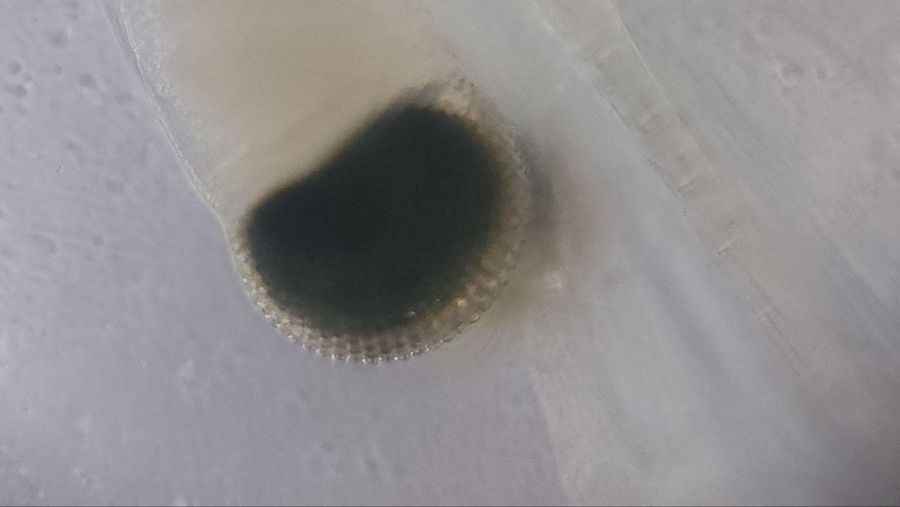
Here are a couple of slides I am sharing with you that gave me an idea to write this post. Do share your slides.
Here are the list of things that you should consider adding on your slide.
Date & Time – When the sample was collected or observed.
Location – The specific place where the sample was collected (e.g., city, village, forest, beach, lab, etc.).
Sample Name / Type – The biological or material name of the sample (e.g., "Glass Krill," "Blood Clot," "Fungi Spores").
Scientific Name (if known) – The proper scientific classification of the sample.
Sample Source / Habitat – Whether it was collected from soil, water, blood, plant, marine life, etc.
Observation Notes – Any specific findings about the sample (e.g., Very large melanocyte cells).
Drawing / Diagram – A small sketch of the observed sample to visualize its structure. This is where you can show your beautiful artworks.
Sample ID / Code – Unique identifier for tracking multiple slides if you are planning to have a deck of slides.
Here are a couple of slides I am sharing with you that gave me an idea to write this post. Do share your slides.


Looking forward to interesting slide designs or maybe fancy slide decks sometime.
Keep Exploring!!
Keep Exploring!!
Sign in to commentNobody has commented yet... Share your thoughts with the author and start the discussion!

 0 Applause
 0 Comments