Could we use Foldscope to detect adulterants in “Edible silver” on Indian sweets!!
 Jan 24, 2015 • 4:14 PM UTC
 Unknown Location
 140x Magnification
 Fungi
Fungi
Manu Prakash
I am a faculty at Stanford and run the Prakash Lab at Department of Bioengineering at Stanford University. Foldscope community is at the heart of our Frugal Science movement - and I can not tell you how proud I am of this community and grassroots movement. Find our work here: http://prakashlab.stanford.edu
267posts
1198comments
42locations

View in Media Gallery
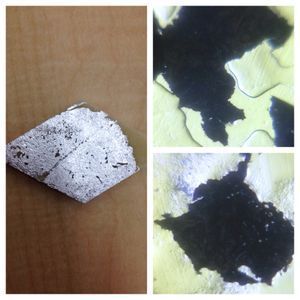
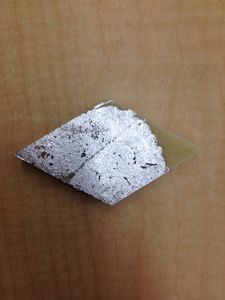
Growing up in India, on my way to school, I used to see a shop which used to have a few boys just beating on a layered skin with a wooden mallet. Later I learned – they were making “Varak” – an ancient indian tradition to put ultra thin films of pure gold and silver on food items; mostly sweets. It sounds a little crazy, but pure silver and gold being inert – they are approved as decoration on food items even in US and Europe.
So when a student just brought some sweets from India, decorated with Varak; I was so excited. I want to figure out
A) what thickness is the film. It would not be not economical as a decoration unless it is ultra thin. But how thin?
B) I have been reading on a few studies; that state that 10% of “varak” has adultrants including nickel and lead.
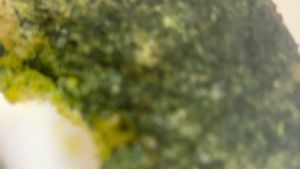
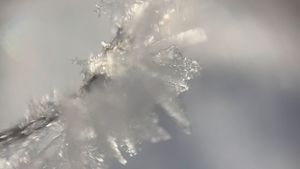
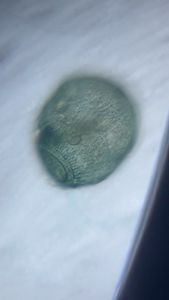
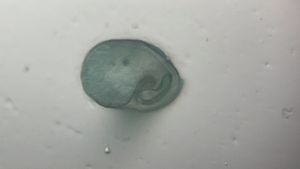
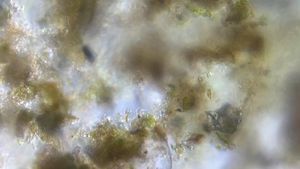
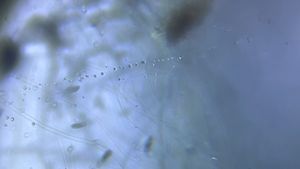
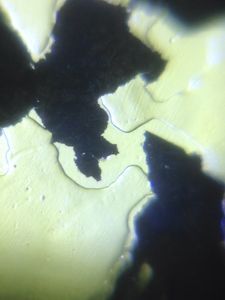
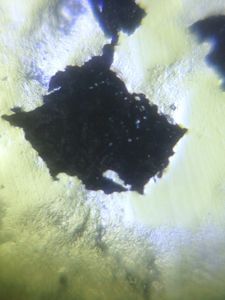
So, in coming weeks; I will see if I can figure out a way to do reactions that can detect minute adultrants and quantify the same. I would also like to know exactly how thick is this metallic film. Some ideas we brainstormed were to try to use plasmonics to see if I can test change in transmitted light with variation in thickness. More on that once I have a scheme that works. Right now; I am posting images of varak at low mag foldscope.
Cheers
Manu
So when a student just brought some sweets from India, decorated with Varak; I was so excited. I want to figure out
A) what thickness is the film. It would not be not economical as a decoration unless it is ultra thin. But how thin?
B) I have been reading on a few studies; that state that 10% of “varak” has adultrants including nickel and lead.
So, in coming weeks; I will see if I can figure out a way to do reactions that can detect minute adultrants and quantify the same. I would also like to know exactly how thick is this metallic film. Some ideas we brainstormed were to try to use plasmonics to see if I can test change in transmitted light with variation in thickness. More on that once I have a scheme that works. Right now; I am posting images of varak at low mag foldscope.
Cheers
Manu

Sign in to commentNobody has commented yet... Share your thoughts with the author and start the discussion!

 0 Applause
 0 Comments