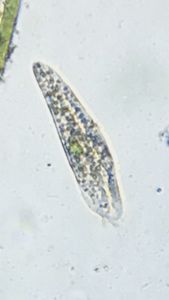
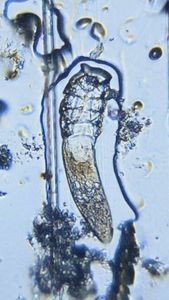
A glimpse of the rotifers living in my hay infusion
 Jul 07, 2019 • 7:13 AM UTC
 Unknown Location
 140x Magnification
 Microorganisms
Cedrick Adorna
Learn about the author...
7posts
4comments
1locations

View in Media Gallery
Last month, I collected some pond water samples from my university and decided to make a simple hay infusion setup at home to see what microbes I can successfully culture. To make the hay infusion, I gathered some dried grass and dead leaves near the pond area (which we call “the lagoon”) and boiled them inside a glass jar. I then left the setup to cool down before filling the remaining volume of the jar with some of the pond water I collected. I check on the infusion every week and recorded the different microbes that would grow in it. For thoroughness, I tried as best as I could to identify each microbe and to note where in the setup I collected them (i.e., whether they were extracted from the top, middle, or bottom of the jar).
During the first two weeks, I observed that ciliates dominated my infusion, with some occasional rotifers and nematodes. But just a couple of days later, I noticed that the population of rotifers, especially bdelloids, boomed so much that they were already visible on the water surface. This piqued my interest so I decided to observe them more closely under the foldscope.
During the first two weeks, I observed that ciliates dominated my infusion, with some occasional rotifers and nematodes. But just a couple of days later, I noticed that the population of rotifers, especially bdelloids, boomed so much that they were already visible on the water surface. This piqued my interest so I decided to observe them more closely under the foldscope.

View in Media Gallery
Approx. size: 0.5 mm

View in Media Gallery
140x magnification Most of the bdelloid rotifers that thrive in my infusion measure about 0.5 mm (500 μm) and thus are visible to the naked eye even when isolated. However, I also observed smaller bdelloids, and I’m not sure if they are the same species as the bigger ones. My best guess is that the predominant type is Philodina sp., though I would very much appreciate if someone could help me identify them more accurately, as I hope to culture them separately after a month. While at it, I’ll investigate further on why and how their population increased so suddenly and successfully.
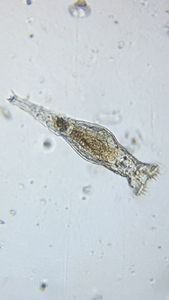
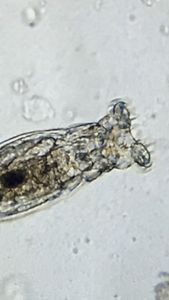
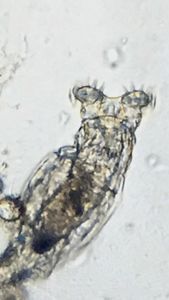
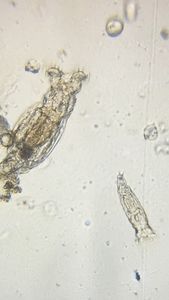
A bdelloid rotifer (prob. Philodina sp.) side-by-side a smaller but similar one

View in Media Gallery
A bdelloid rotifer side-by-side a smaller, different species of rotifer (prob. Colurella sp.)
View in Media Gallery
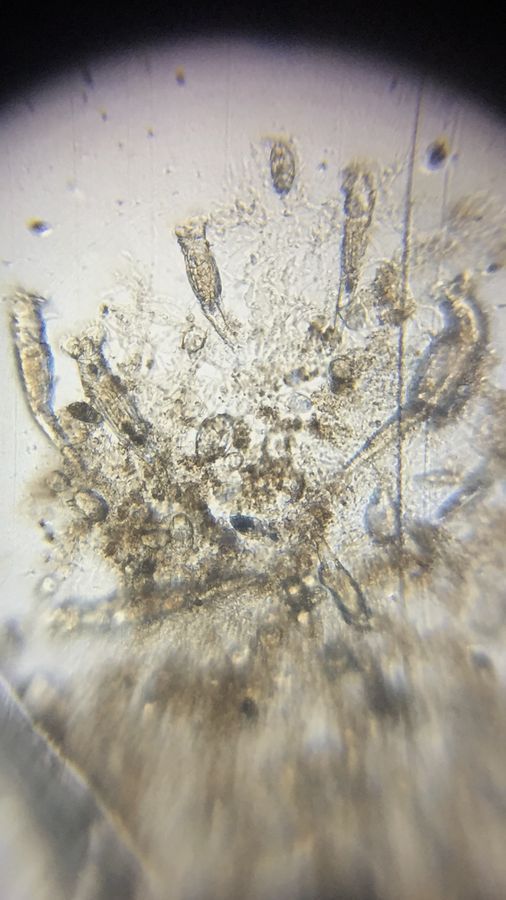
A colony of bdelloid rotifers I am also planning to feature the different cultures I have managed to establish from the same pond water samples in my next posts, so stay tuned! Currently, I call them my “micropets”. Foldscoping has really opened a lot of avenues for me to discover my passions, and right now I’m thinking of becoming a micro-breeder!
Sign in to commentNobody has commented yet... Share your thoughts with the author and start the discussion!
 0 Applause
 0 Comments