Microbial diversity in a paddy field water sample – Part 2
 Aug 05, 2019 • 1:46 AM UTC
 Unknown Location
 140x Magnification
 Microorganisms
Jayashree Ramadas
We are a group of students, volunteers and staff working with TIFR Hyderabad's Science Education and Outreach program: http://www.tifrh.res.in/~outreach/
39posts
26comments
2locations
View in Media Gallery
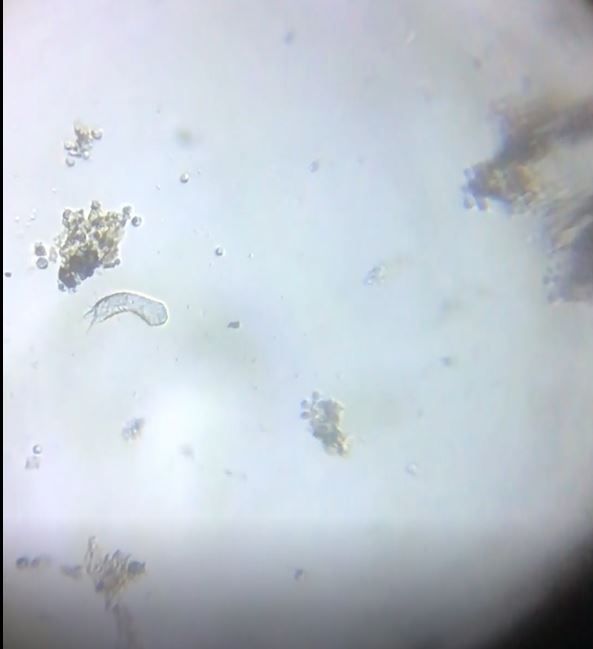
DIATOMS, ROTIFERS and SOMEONE UNIQUE

View in Media Gallery
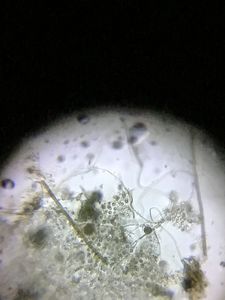
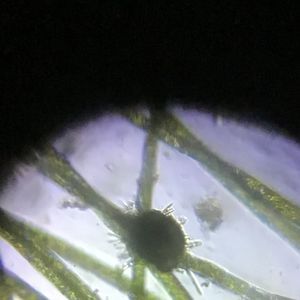
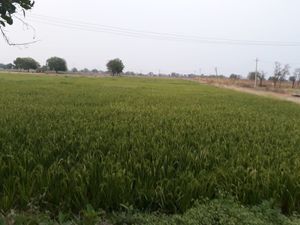
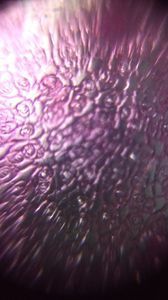
The water drop sample from the paddy field further showed moving diatoms and rotifers.
View in Media Gallery
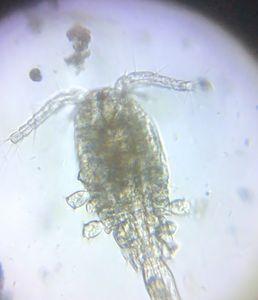
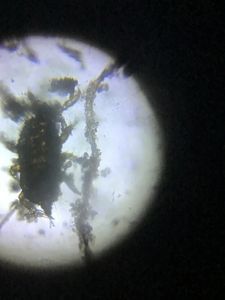
One particular organism puzzled me. At first, from its bifurcated tail, I thought it was a rotifer. But on better focusing, I observed its cilia .

View in Media Gallery
Was it a ciliate? It seemed too big for a ciliate. YouTube and Google explorations indicated that this was neither a rotifer nor a ciliate, but an organism called Chaetonotus , belonging to the Phylum Gastrotricha.
Chaetonotus was an incredibly fast microbe and I struggled over an entire day to capture its movements in my videos. At the end of the day, when I finally recorded this video, this poor Chaetonotus must have been exhausted, as its movements had become very slow. I later learnt that the average life span of a gastrotrich is only around 3-21 days.
Look out for the next post!
See Part 1 and Part 3 of this series.
Cheers for now!
Ashalatha
with Debashree, Jayashree, Chandrika
Chaetonotus was an incredibly fast microbe and I struggled over an entire day to capture its movements in my videos. At the end of the day, when I finally recorded this video, this poor Chaetonotus must have been exhausted, as its movements had become very slow. I later learnt that the average life span of a gastrotrich is only around 3-21 days.
Look out for the next post!
See Part 1 and Part 3 of this series.
Cheers for now!
Ashalatha
with Debashree, Jayashree, Chandrika
Sign in to commentNobody has commented yet... Share your thoughts with the author and start the discussion!

 0 Applause
 0 Comments