LGP -B2 Day 1 : Onion Peel
 Jun 13, 2026 • 12:08 PM UTC
 India
India 340x Magnification
 Plants
Janardhan
Learn about the author...
2posts
0comments
0locations

View in Media Gallery
Hello!
After familiarising myself with the Foldscope 2.0, I moved on to my second sample. Now, I had to prepare my own sample. I definitely underestimated the effort needed for preparing samples. An unexpected challenge(but one that was resolved quickly) was mounting the thin onion peel onto the glass slide without damaging or folding it.
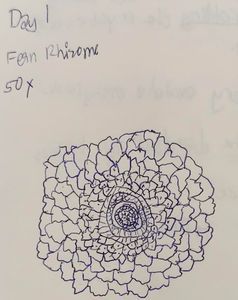
After I set up the slide with a little tape , I was ready to go. I started by using a 50x lens, to get a overall view of the onion peel.The structure was much more complicated than the fern rhizome. Instead of having a clear cross-section, I could see a thick, multi-layered network of cells.
I also noticed that the onion peel had many long, “filament-like” structures.
Images:
After familiarising myself with the Foldscope 2.0, I moved on to my second sample. Now, I had to prepare my own sample. I definitely underestimated the effort needed for preparing samples. An unexpected challenge(but one that was resolved quickly) was mounting the thin onion peel onto the glass slide without damaging or folding it.
After I set up the slide with a little tape , I was ready to go. I started by using a 50x lens, to get a overall view of the onion peel.The structure was much more complicated than the fern rhizome. Instead of having a clear cross-section, I could see a thick, multi-layered network of cells.
I also noticed that the onion peel had many long, “filament-like” structures.
Images:


After observing the sample for a little longer, I used the 140x lens. Under the 140x lens, an astonishing level of detail emerged.A large number of rectangular, brick-like cells were organised into long repeating structures. Surprisingly, even by using a 140x lens, a few nuclei were visible without any stain. Another thing I noted was that there were significant differences between some cells - some cells seemed to have only a little cytoplasm, while others had a lot, some had a visible nuclei while others didn’t etc.
Images:
Images:


Lately, to get a deeper dive into the onion cells, I used the 340x lens. At this level, only 5-6 individual cells were visible. However, it was fairly hard to adjust the focus and view perfectly without disturbing the sample. I will let the images do the rest of the talking:


Sign in to commentNobody has commented yet... Share your thoughts with the author and start the discussion!
 0 Applause
 0 Comments