Hunting for tardigrades (water bears)
 Oct 17, 2015 • 10:39 PM UTC
 Unknown Location
 140x Magnification
 Unknown
Tom Hata
Learn about the author...
17posts
18comments
3locations
View in Media Gallery
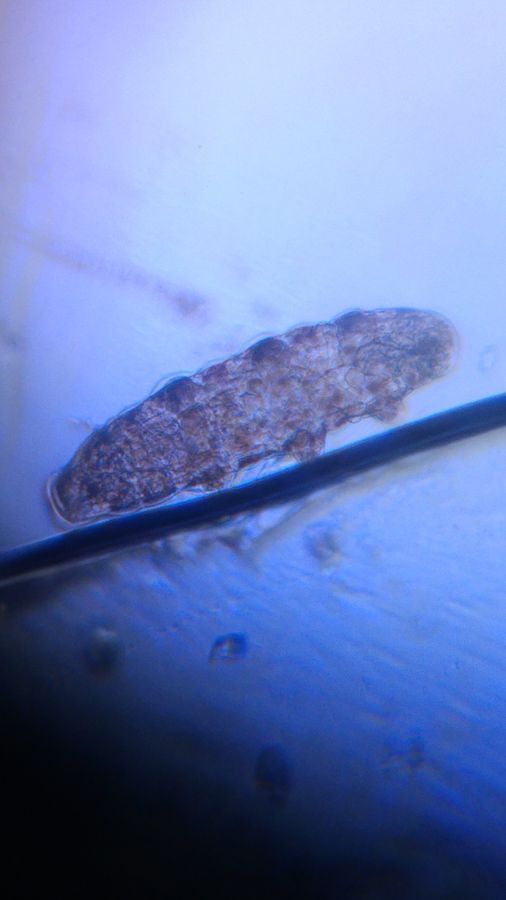
For as long as I’ve owned a Foldscope, there’s been one animal that I’ve been trying to image in vain. Namely, the tardigrade (or water bear). These extreme animals (that resemble microscopic, 8-legged pigs) can live for years without food or water and can even survive outer space!
View in Media Gallery
This week, I was able to finally find my first tardigrades in the wild! Here’s how I did it:
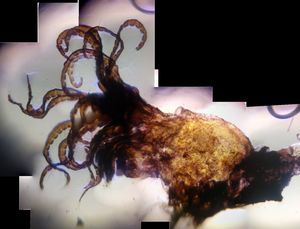
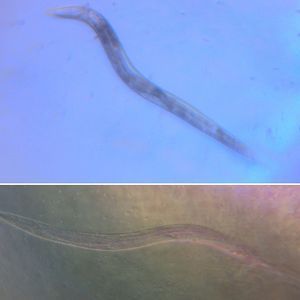
I soaked a piece of moss in a petri dish with distilled water. After about an hour, I scanned the water in the dish. There was so much microscopic life that I got distracted for a few hours, but eventually I did find several tardigrades. I was using a dissecting scope in dark field to scan through the water sample quickly. Hopefully I can find a way that won’t need this in the future. Here is a tardigrade in bright field, approximately 100 microns in length. Here is another in dark field. Notice that it actually does crawl along the substrate with its 8 legs. It’s hard for me to fathom walking at such a tiny scale.
These guys actually move pretty quickly, so it helped to pin the tardigrades to a small region of a slide by limiting the size of the droplet on the slide.
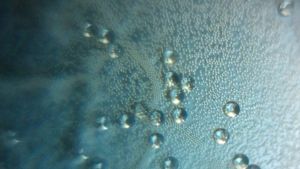
I inadvertently made a tiny obstacle course for one of them, and you can see it fighting against surface tension on the air-water interface. I’m wondering if I can make a rudimentary calculation of force generation from this. Check out ~35 sec in, where the tardigrade makes himself a little port hole.
I soaked a piece of moss in a petri dish with distilled water. After about an hour, I scanned the water in the dish. There was so much microscopic life that I got distracted for a few hours, but eventually I did find several tardigrades. I was using a dissecting scope in dark field to scan through the water sample quickly. Hopefully I can find a way that won’t need this in the future. Here is a tardigrade in bright field, approximately 100 microns in length. Here is another in dark field. Notice that it actually does crawl along the substrate with its 8 legs. It’s hard for me to fathom walking at such a tiny scale.
These guys actually move pretty quickly, so it helped to pin the tardigrades to a small region of a slide by limiting the size of the droplet on the slide.
I inadvertently made a tiny obstacle course for one of them, and you can see it fighting against surface tension on the air-water interface. I’m wondering if I can make a rudimentary calculation of force generation from this. Check out ~35 sec in, where the tardigrade makes himself a little port hole.
Sign in to commentNobody has commented yet... Share your thoughts with the author and start the discussion!
 0 Applause
 0 Comments