My Continuing Journey With Tardigrades and Cryptobiosis
 Jul 15, 2025 • 7:09 AM UTC
 India
India 140x Magnification
 Unknown
adhritp
Foldscoper of the Month for July !!!
6posts
4comments
0locations
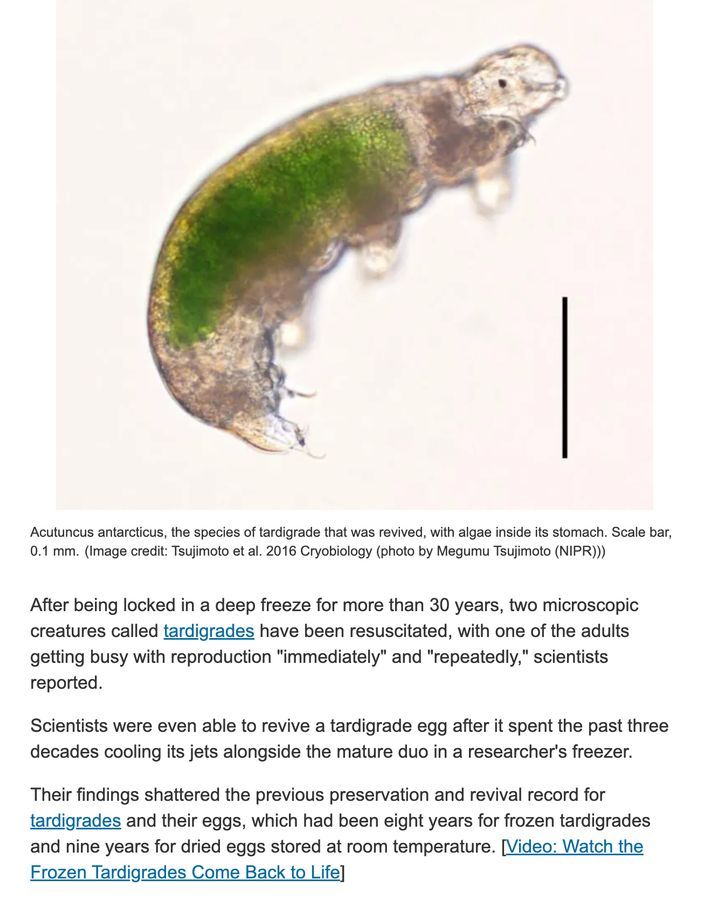
My journey with tardigrades
The humble tardigrade, or "water bear," has captured the popular imagination for its seemingly indestructible nature. It has also drawn scientific attention due to its extraordinary ability to go into all 5 states of suspended animation, also known as cryptobiosis.There are 5 kinds of cryptobiosis: anhydrobiosis(no water), anoxybiosis(no oxygen), cryobiosis(temperature drop),
chemobiosis(high toxins) and osmobiosis(too much water).
My own journeys to find tardigrades started three years ago, and I looked at all kinds of samples, but I did not have success until quite recently, when as I inspected a lichen sample to find rotifers, I stumbled upon a lone tardigrade.
The humble tardigrade, or "water bear," has captured the popular imagination for its seemingly indestructible nature. It has also drawn scientific attention due to its extraordinary ability to go into all 5 states of suspended animation, also known as cryptobiosis.There are 5 kinds of cryptobiosis: anhydrobiosis(no water), anoxybiosis(no oxygen), cryobiosis(temperature drop),
chemobiosis(high toxins) and osmobiosis(too much water).
My own journeys to find tardigrades started three years ago, and I looked at all kinds of samples, but I did not have success until quite recently, when as I inspected a lichen sample to find rotifers, I stumbled upon a lone tardigrade.

Since at that time I was working on the suspended animation state of rotifers, I also knew that tardigrades had a similar state, albeit more evolved and durable. I therefore put my first tardigrade in a suspended state of animation by drying it(anhydrobiosis), as it was the most doable state and most observable state at the time.

A tardigrade in the tun state.
The calculations I did on this state
After dehydrating the tardigrade, I decided to look at the lifespan of a tardigrade in their anhydrobiote state as compared to their lifespan in an active state.
Therefore to do a comparison, I put both values into a ratio.
The average lifespan of an active tardigrade is around five months.
Comparing that to the lifespan of the dormant state, which is around fifteen years, I needed to convert fifteen years into months.
Therefore,
5 months : 180 months
Upon further simplification,
1 month : 36 months
Assuming a month is thirty days, notwithstanding the actual average of all months:
30 days : 1080 days
And now
1 day : 36 days.
Therefore, to calculate the amount of time that it could have lived (active : dormant) for a single active hour,
24 hours : 864 hours
1 hour : 36 hours
Therefore, for every one hour a tardigrade lives active, it could have lived thirty-six hours in stasis.
My questions, and visit to Jain University
One of my most pressing questions about tardigrades has been whether they could survive even more extended periods of cryobiosis, similar to rotifers. After some digging in the internet I found out that a tardigrade in a piece of moss that had been kept in a herbarium for a hundred years was successfully revived after it was hydrated! This was very interesting.
I also observed the habitat of the tardigrade. One of my questions was: How did they get there? Lichen are relatively small and they grow from spores that are dispersed by the rain, and they grow too high for soil organisms like tardigrades to crawl up to them, and for what purpose?
Tardigrades do not have too much of energy and they would of course prefer an easier option.
Around the time that I was experimenting with tardigrades, I got the chance to visit the microbiology labs at Jain University. I spoke with the HOD of the microbiology department and she gave me some insights as to how tardigrades might have gotten to these places! She said that tardigrades are dispersed much like other microorganisms and that by studying one, we can derive a hypotheses for the study of the other’s movement. Therefore, she talked to me about methods that tardigrades and other microorganisms might use to get up to high places, like lichen on trees.
For example, droplet spraying and aerosol( propulsion by air) from animals/ rain is a way that microorganisms get to these high places.
Setbacks
During my visit, I was lucky enough to use Jain University’s camera microscope to study the rehydration of the aforementioned, visible tardigrade. A notable thing was that almost immediately after water was added, the tardigrade inflated to it’s full length and started twitching!
Although I watched the tardigrade for a better part of two hours, I was unfortunately unable to watch the process as I had to go home because of the university’s closing times.
A strange thing that happened is that when I reached home, there was no tardigrade on the slide! There was absolutely no movement or trace of it.
It was strange because I kept the slide sealed and hydrated throughout the journey, and did not touch it.
Wanting to find more tardigrades, I collected a lichen sample again and rehydrated it.
Strangely and unfortunately, when I took a water sample and checked, all tardigrades I found were dead and there were bacteria feeding on them.
After checking on the sample after a few days, I found that there was a thick biofilm on the water that the lichen were sitting in. When I examined the biofilm, I found the same kind of bacteria that had consumed the tardigrades! I immediately threw out the contaminated container and sanitized the whole lab to prevent this from occuring again.
One of my other major challenges was the growth rate of lichen. Since I had observed every possible source of tardigrades in my area, and found none, I was forced to keep harvesting lichen if I wanted to continue studying tardigrades. As lichen takes a very long time to grow, this was very detrimental to the micro-ecosysytem and also to the growth of lichens as a whole. Therefore, I decided to try and start a tardigrade culture which I am currently working on achieving right now!
The calculations I did on this state
After dehydrating the tardigrade, I decided to look at the lifespan of a tardigrade in their anhydrobiote state as compared to their lifespan in an active state.
Therefore to do a comparison, I put both values into a ratio.
The average lifespan of an active tardigrade is around five months.
Comparing that to the lifespan of the dormant state, which is around fifteen years, I needed to convert fifteen years into months.
Therefore,
5 months : 180 months
Upon further simplification,
1 month : 36 months
Assuming a month is thirty days, notwithstanding the actual average of all months:
30 days : 1080 days
And now
1 day : 36 days.
Therefore, to calculate the amount of time that it could have lived (active : dormant) for a single active hour,
24 hours : 864 hours
1 hour : 36 hours
Therefore, for every one hour a tardigrade lives active, it could have lived thirty-six hours in stasis.
My questions, and visit to Jain University
One of my most pressing questions about tardigrades has been whether they could survive even more extended periods of cryobiosis, similar to rotifers. After some digging in the internet I found out that a tardigrade in a piece of moss that had been kept in a herbarium for a hundred years was successfully revived after it was hydrated! This was very interesting.
I also observed the habitat of the tardigrade. One of my questions was: How did they get there? Lichen are relatively small and they grow from spores that are dispersed by the rain, and they grow too high for soil organisms like tardigrades to crawl up to them, and for what purpose?
Tardigrades do not have too much of energy and they would of course prefer an easier option.
Around the time that I was experimenting with tardigrades, I got the chance to visit the microbiology labs at Jain University. I spoke with the HOD of the microbiology department and she gave me some insights as to how tardigrades might have gotten to these places! She said that tardigrades are dispersed much like other microorganisms and that by studying one, we can derive a hypotheses for the study of the other’s movement. Therefore, she talked to me about methods that tardigrades and other microorganisms might use to get up to high places, like lichen on trees.
For example, droplet spraying and aerosol( propulsion by air) from animals/ rain is a way that microorganisms get to these high places.
Setbacks
During my visit, I was lucky enough to use Jain University’s camera microscope to study the rehydration of the aforementioned, visible tardigrade. A notable thing was that almost immediately after water was added, the tardigrade inflated to it’s full length and started twitching!
Although I watched the tardigrade for a better part of two hours, I was unfortunately unable to watch the process as I had to go home because of the university’s closing times.
A strange thing that happened is that when I reached home, there was no tardigrade on the slide! There was absolutely no movement or trace of it.
It was strange because I kept the slide sealed and hydrated throughout the journey, and did not touch it.
Wanting to find more tardigrades, I collected a lichen sample again and rehydrated it.
Strangely and unfortunately, when I took a water sample and checked, all tardigrades I found were dead and there were bacteria feeding on them.
After checking on the sample after a few days, I found that there was a thick biofilm on the water that the lichen were sitting in. When I examined the biofilm, I found the same kind of bacteria that had consumed the tardigrades! I immediately threw out the contaminated container and sanitized the whole lab to prevent this from occuring again.
One of my other major challenges was the growth rate of lichen. Since I had observed every possible source of tardigrades in my area, and found none, I was forced to keep harvesting lichen if I wanted to continue studying tardigrades. As lichen takes a very long time to grow, this was very detrimental to the micro-ecosysytem and also to the growth of lichens as a whole. Therefore, I decided to try and start a tardigrade culture which I am currently working on achieving right now!
Sign in to commentNobody has commented yet... Share your thoughts with the author and start the discussion!
 0 Applause
 0 Comments