LGP25B3 - Probing a Potato Peel!
 Jun 07, 2025 • 5:04 PM UTC
 India
India 340x Magnification
 Plants
Karthik Agarwal
Hi! I'm a student from India, currently studying in 10th grade (ICSE board).
9posts
4comments
0locations
View in Media Gallery
It’s time to look at the surface of the potato, not just its insides!

View in Media Gallery
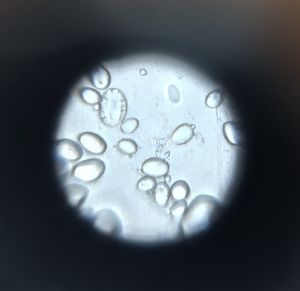
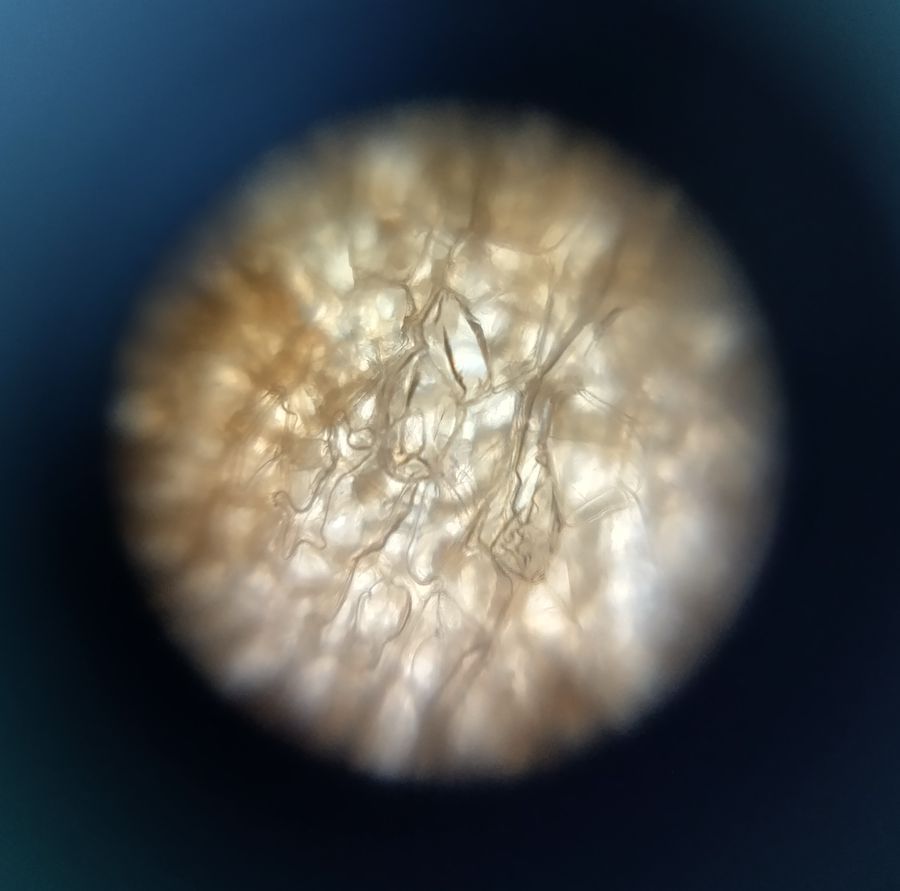
At 50X magnification, it is immediately evident that there is a lot of overlapping among the cells. They are layered on top of one another, and the darker regions where light is not easily passing through indicate a greater number of layers being present. Immediately, this is vastly different from the onion skin sample I took earlier, where there was a single layer of cells visible.
Additionally, we can see that the cells of the rind are a lot more irregular in shape, as compared to the onion skin cells. The cells here are also packed together with no intercellular spaces in between them. This is quite different from the way the potato flesh cells were arranged, though it is similar to how the onion skin cells were packed. From this, we can conclude that since the outer coverings of the vegetables are protective in nature, their cells need to be packed closely together. On the other hand, the flesh of the vegetable serves the function of storage, and so, its cells have more spaces between them.
Additionally, we can see that the cells of the rind are a lot more irregular in shape, as compared to the onion skin cells. The cells here are also packed together with no intercellular spaces in between them. This is quite different from the way the potato flesh cells were arranged, though it is similar to how the onion skin cells were packed. From this, we can conclude that since the outer coverings of the vegetables are protective in nature, their cells need to be packed closely together. On the other hand, the flesh of the vegetable serves the function of storage, and so, its cells have more spaces between them.

View in Media Gallery
Going to 140X magnification, a difficulty I faced here was distinguishing the cell walls of the cells in view. Due to the way the cells are layered, there is less clarity, thus making the image more confusing. However, we can definitely see some fibres at this magnification.

View in Media Gallery
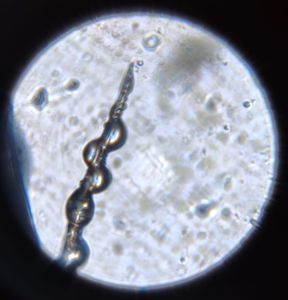
The fibres appear even more pronounced at 340X magnification. They appear to be quite thick, and the contours are very irregular and rough.
Thus, the potato rind’s fibrous nature, and its protective function, are both evident from these pictures and observations!
Thus, the potato rind’s fibrous nature, and its protective function, are both evident from these pictures and observations!
Sign in to commentNobody has commented yet... Share your thoughts with the author and start the discussion!

 0 Applause
 0 Comments