Exploring Everyday Vegetables (Exploring the Microcosm, LGPB4 2026)
 Jun 12, 2026 • 3:20 AM UTC
 India
India 340x Magnification
 Plants
Kavya Sahu
Learn about the author...
5posts
0comments
0locations
View in Media Gallery
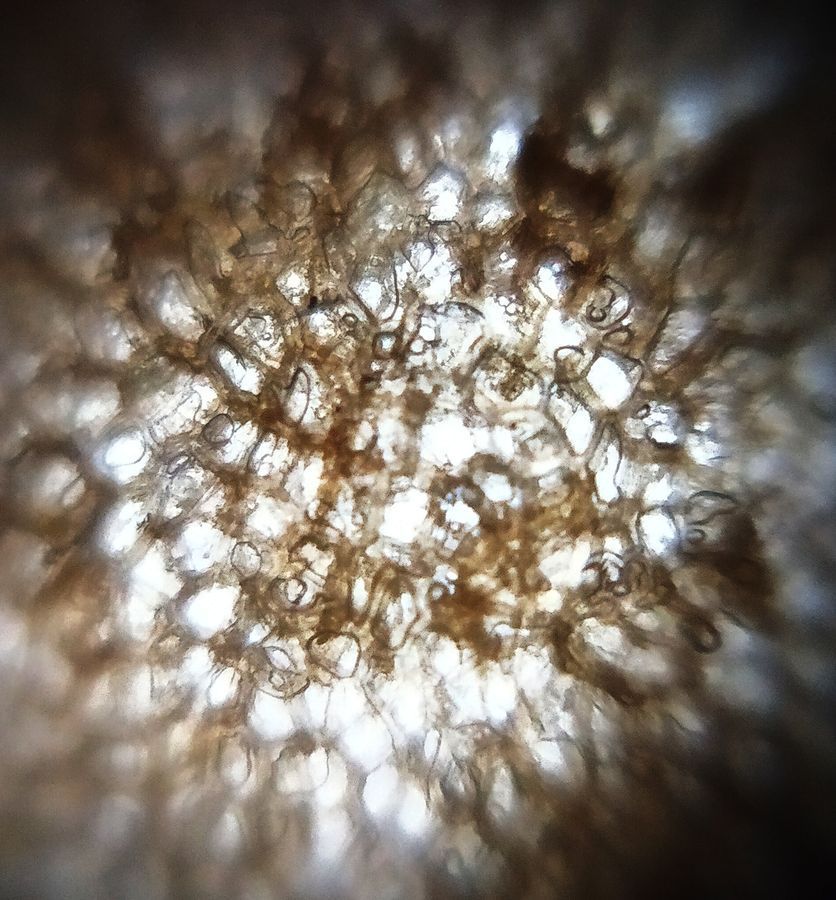
In the Exploring the Microcosm course at the Lodha Genius Program in Ashoka University, we used Foldscopes to look at potato peel, potato tissue, tomato peel, and tomato tissue.
Our observations revealed clear differences between the outer peel and the inner tissues of both vegetables. The potato cells seemed tightly packed, while the tomato tissue appeared less dense and had visible pigments. The peels acted as protective outer layers with structures that were different from the inner cells.
This is a potato peel V/S a potato tissue:
Our observations revealed clear differences between the outer peel and the inner tissues of both vegetables. The potato cells seemed tightly packed, while the tomato tissue appeared less dense and had visible pigments. The peels acted as protective outer layers with structures that were different from the inner cells.
This is a potato peel V/S a potato tissue:


This is a tomato peel V/S a tomato tissue:


By comparing the four samples, we could spot similarities and differences between the tissues. The potato tissue had a more uniform cell arrangement, while the tomato tissue looked less packed. The tomato samples also showed more color because of the pigments in the fruit. In both vegetables, we could tell the peel apart from the inner tissue due to its unique structure and organization.
This activity helped us learn that different plant tissues have various structures and functions, even in the same vegetable. It also gave us a hands-on introduction to observing and comparing plant cells using a Foldscope. Overall, it was a fun way to study plant tissues and look at features that we can't see with our eyes alone.
This activity helped us learn that different plant tissues have various structures and functions, even in the same vegetable. It also gave us a hands-on introduction to observing and comparing plant cells using a Foldscope. Overall, it was a fun way to study plant tissues and look at features that we can't see with our eyes alone.
Sign in to commentNobody has commented yet... Share your thoughts with the author and start the discussion!

 0 Applause
 0 Comments

