LGP 26 B3 POTATO FLESH- DAKSH
 Jun 06, 2026 • 6:33 AM UTC
 India
India 50x Magnification
 Plants
Daksh Sethi07
Learn about the author...
6posts
0comments
0locations

View in Media Gallery
50× Magnification At 50× magnification, I could see many tiny round structures scattered throughout the specimen. The tissue looked grainy and uneven rather than organized. There were clusters of small granules visible across the slide. At this magnification, I could mainly observe the overall texture and distribution of these structures.

View in Media Gallery
140× Magnification At 140× magnification, the granules became much easier to see. Many of them appeared round or oval in shape and were often grouped together in clusters. I noticed that some granules were larger than others, and certain regions of the specimen seemed densely packed with them. The starch granules looked very fascinating when i first looked at them through a foldscope

View in Media Gallery
340× Magnification At 340× magnification, the starch granules were the most noticeable feature in the field of view. Individual granules appeared larger and more distinct, with some looking almost transparent while others had darker outlines. I could also see variations in their size and shape, with some appearing perfectly round and others slightly oval. Seeing so many starch granules up close made it easy to understand why potatoes are such an important energy-storage organ for the plant.

View in Media Gallery
Sign in to commentNobody has commented yet... Share your thoughts with the author and start the discussion!

 0 Applause
 0 Comments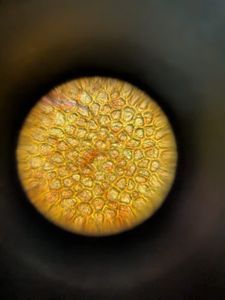


_300x300.jpeg)