LGP26-B3: Exploring Sunflower Pollen Through a Foldscope
 Jun 05, 2026 • 5:12 PM UTC
 India
India 140x Magnification
 Unknown
Ananya Dixit
Learn about the author...
6posts
0comments
0locations
View in Media Gallery
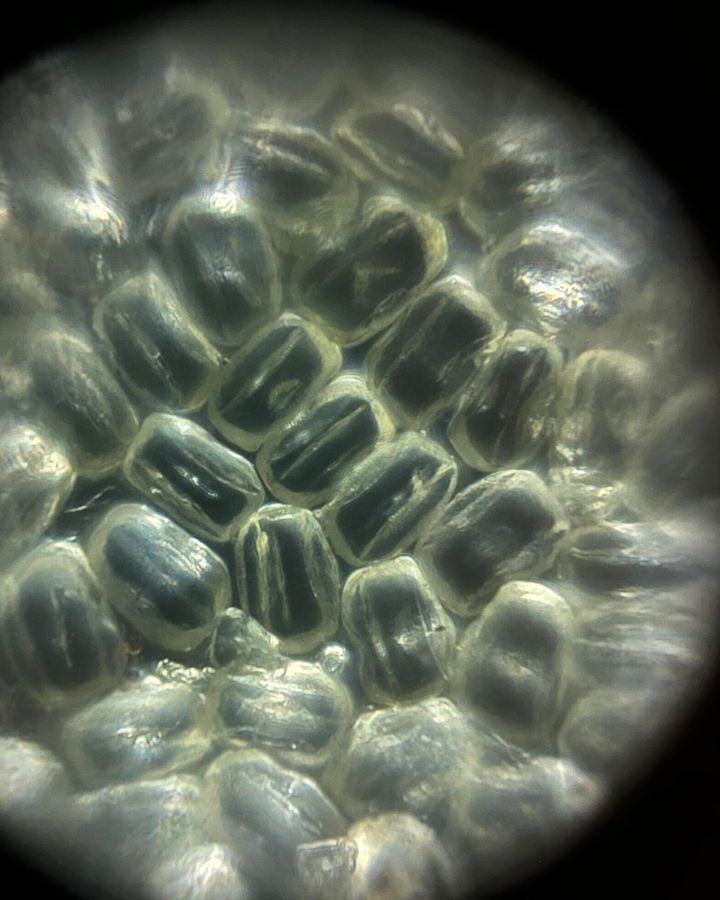
Exploring Sunflower Pollen Through a Foldscope As part of the Exploring the Microcosm course, I observed sunflower pollen under 50x, 140x, and 340x magnifications using a Foldscope. It was fascinating to see how something that looks like ordinary yellow dust actually has its own unique structure.
At 50x magnification , the pollen appeared as tiny yellow particles scattered across the slide. I could see their general shape, but the finer details were not visible.
At 140x magnification , the individual pollen grains became much clearer. They appeared more distinct and showed interesting patterns on their surfaces.
At 340x magnification , the pollen grains revealed even more detail. Their shapes and textures became easier to observe, making me realize how specialized these tiny structures are for plant reproduction.
One challenge I faced was preparing the sample without clumping the pollen grains together. Focusing the Foldscope at higher magnifications was also difficult, as slight movements made the image blurry. After several adjustments, I was able to get a clearer view.
This activity showed me that even the smallest parts of a flower can be incredibly complex. Observing sunflower pollen helped me appreciate the hidden microscopic world that exists all around us.
At 50x magnification , the pollen appeared as tiny yellow particles scattered across the slide. I could see their general shape, but the finer details were not visible.
At 140x magnification , the individual pollen grains became much clearer. They appeared more distinct and showed interesting patterns on their surfaces.
At 340x magnification , the pollen grains revealed even more detail. Their shapes and textures became easier to observe, making me realize how specialized these tiny structures are for plant reproduction.
One challenge I faced was preparing the sample without clumping the pollen grains together. Focusing the Foldscope at higher magnifications was also difficult, as slight movements made the image blurry. After several adjustments, I was able to get a clearer view.
This activity showed me that even the smallest parts of a flower can be incredibly complex. Observing sunflower pollen helped me appreciate the hidden microscopic world that exists all around us.
Sign in to commentNobody has commented yet... Share your thoughts with the author and start the discussion!

 0 Applause
 0 Comments
_300x300.jpeg)
_300x300.jpeg)