The largest thing in the world is a Jail!
 Sep 27, 2025 • 1:39 PM UTC
 India
India 140x Magnification
 Workshops and Events
_300x300.jpeg)
Sonali Kadam
Learn about the author...
5posts
0comments
2locations

View in Media Gallery
What can a paper microscope teach us about emotions? In our first GullyWell workshop at Sahara Aalhad, the Foldscope revealed the hidden life of an ant, while SIFT- using awareness as its lens- revealed hidden emotional landscapes. The children began with one word: joy, then came another word, jail . Between them lay the vast terrain we set out to explore.
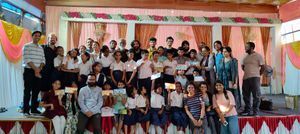
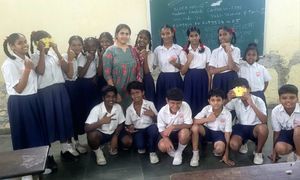
On a Sunday afternoon, we entered a room full of children aged 8 to 14, along with a few young women aged 17 to 21. Children had arrived early and were waiting. The moment we stepped in, they shouted, “Magic, magic!” A boy asked, “Will you show us magic today?” I replied, “We will do something more exciting than magic.”
This was our first workshop at Sahara Aalhad . My partner, Kunal, and I started an initiative called GullyWell to equip people with well-being tools to thrive in life, not just survive. For our initial experiments, we use the Foldscope as a scientific inquiry tool to build connections with mental well-being.
Sahara Aalhad is a Pune-based NGO, established in 1981, that provides residential care, rehabilitation, and support to marginalised communities, especially those affected by HIV/AIDS, TB, and substance abuse. Their services include nutrition, medical and psychological care, education, and vocational training, with a focus on empowerment. The organisation follows a peer-led approach, with caregivers deeply familiar with the lives and needs of the people they serve.
We started with an energiser borrowed from the world of theatre, the Freeze Emotion Game. I wanted to know their vocabulary of emotions.
Everyone moved at speeds from 1 to 5, with 1 being the slowest possible and 5 being the fastest. The kids enjoyed themselves, running wildly at speed 5 and dragging their feet at speed 1 like sloths. When I said 'freeze', they froze stiffly, without any expression. After I demonstrated again, we tried another round. This time, they froze into emotions. I looked closely and asked them to name what they were showing. A 10-year-old girl said, Khup chan vatatay - I feel very joyful. A few other boys and girls said the same thing, and they portrayed it with big smiles on their faces.
Later, during a circle check-in, the same phrase echoed again. I noticed their vocabulary stopped there; joy was the only word they carried with them.
On a Sunday afternoon, we entered a room full of children aged 8 to 14, along with a few young women aged 17 to 21. Children had arrived early and were waiting. The moment we stepped in, they shouted, “Magic, magic!” A boy asked, “Will you show us magic today?” I replied, “We will do something more exciting than magic.”
This was our first workshop at Sahara Aalhad . My partner, Kunal, and I started an initiative called GullyWell to equip people with well-being tools to thrive in life, not just survive. For our initial experiments, we use the Foldscope as a scientific inquiry tool to build connections with mental well-being.
Sahara Aalhad is a Pune-based NGO, established in 1981, that provides residential care, rehabilitation, and support to marginalised communities, especially those affected by HIV/AIDS, TB, and substance abuse. Their services include nutrition, medical and psychological care, education, and vocational training, with a focus on empowerment. The organisation follows a peer-led approach, with caregivers deeply familiar with the lives and needs of the people they serve.
We started with an energiser borrowed from the world of theatre, the Freeze Emotion Game. I wanted to know their vocabulary of emotions.
Everyone moved at speeds from 1 to 5, with 1 being the slowest possible and 5 being the fastest. The kids enjoyed themselves, running wildly at speed 5 and dragging their feet at speed 1 like sloths. When I said 'freeze', they froze stiffly, without any expression. After I demonstrated again, we tried another round. This time, they froze into emotions. I looked closely and asked them to name what they were showing. A 10-year-old girl said, Khup chan vatatay - I feel very joyful. A few other boys and girls said the same thing, and they portrayed it with big smiles on their faces.
Later, during a circle check-in, the same phrase echoed again. I noticed their vocabulary stopped there; joy was the only word they carried with them.

View in Media Gallery
To expand their understanding of emotions, we introduced them to seven basic emotions: joy, anger, sadness, disgust, surprise, fear, and contempt, based on the research of psychologist Paul Ekman on universal emotions. In this round, the goal was to familiarise them with emotion vocabulary.
We asked everyone to share an example of each emotion along with the physical sensations they associated with it, and later demonstrated common physical sensations.
We asked everyone to share an example of each emotion along with the physical sensations they associated with it, and later demonstrated common physical sensations.

View in Media Gallery
During a group check-in, most of the girls expressed feeling both happy and afraid, while most of the boys expressed only joy. One boy mentioned anger along with happiness, but none of the boys acknowledged fear. We ended with a movement activity, dancing together and sharing biscuits.

View in Media Gallery
In the next session, we built a microscope. Before that, I did one of my favorite induction activities. I asked them to close their eyes and imagine the largest thing they had ever seen, and then the smallest. I use this to open the invisible world of creatures that exist beyond imagination, waiting to be revealed by young scientists.
One of the boys said “lake,” another said “mountain,” and another said “earth.” After that, everybody started repeating “earth,” until a 10-year-old girl silently said “jail.” It was like a speed breaker on a long road, a sudden jerk.
For a child so young to name confinement as the largest thing- what must her world have shown her? This was a reminder that for some, the earth is the largest, and for others, a confined space. Of course, jail is not just a confined space; it is the confinement of a life within walls. What else could be larger than that?
I was curious to know more, but being a teacher, I moved on, treating every response with equal weight. None is greater or lesser, right or wrong, extreme or balanced. Every response is a unique expression belonging to those unique tiny humans.
We moved to the smallest things. To my surprise, no one said “germs.” In nine years of doing this activity, I had always heard it. Instead, they spoke of other kinds of smallness, surprising me as much in what their limited exposure kept from them as in what they imagined.
One of the boys said “lake,” another said “mountain,” and another said “earth.” After that, everybody started repeating “earth,” until a 10-year-old girl silently said “jail.” It was like a speed breaker on a long road, a sudden jerk.
For a child so young to name confinement as the largest thing- what must her world have shown her? This was a reminder that for some, the earth is the largest, and for others, a confined space. Of course, jail is not just a confined space; it is the confinement of a life within walls. What else could be larger than that?
I was curious to know more, but being a teacher, I moved on, treating every response with equal weight. None is greater or lesser, right or wrong, extreme or balanced. Every response is a unique expression belonging to those unique tiny humans.
We moved to the smallest things. To my surprise, no one said “germs.” In nine years of doing this activity, I had always heard it. Instead, they spoke of other kinds of smallness, surprising me as much in what their limited exposure kept from them as in what they imagined.


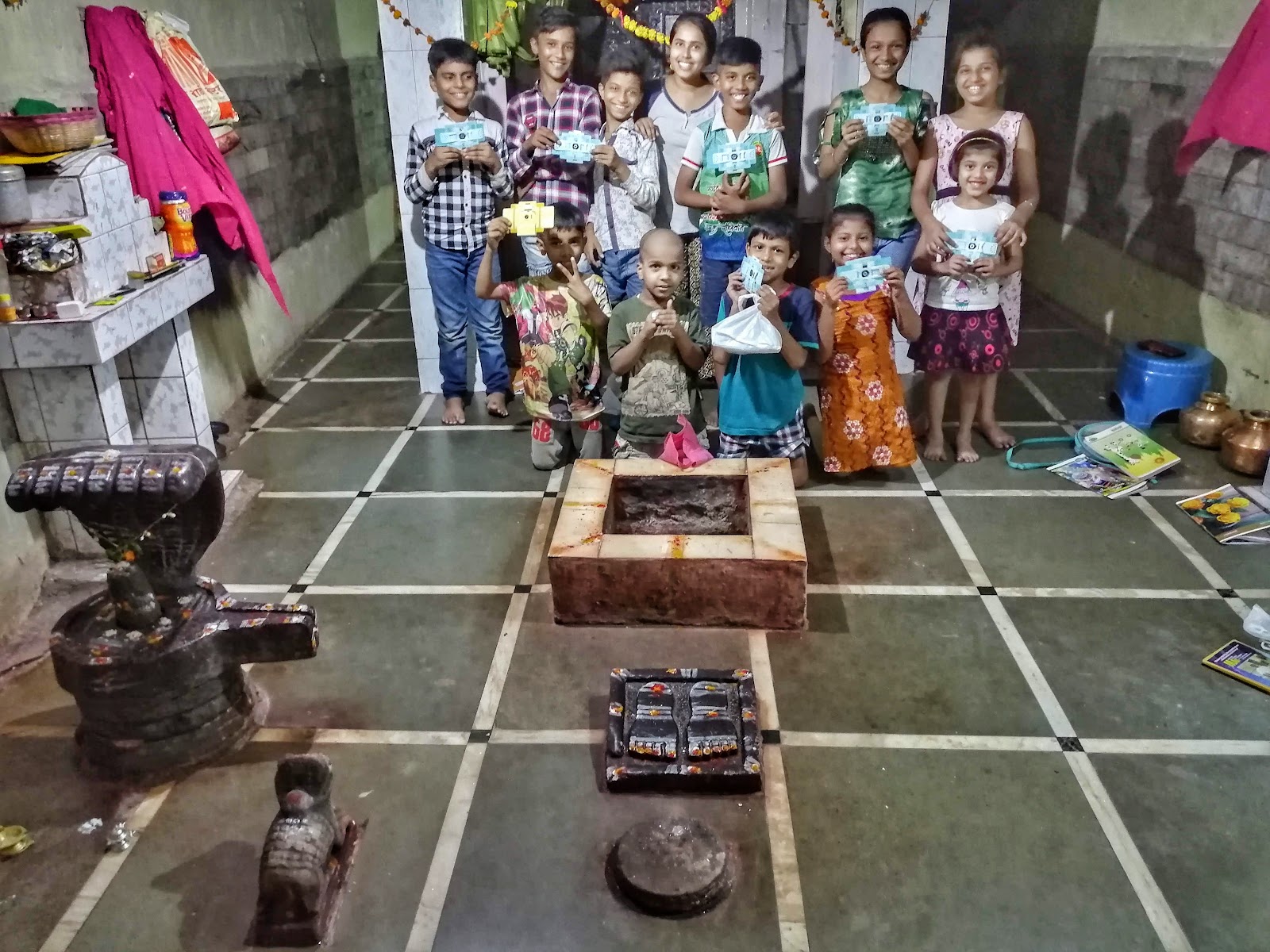
Together, we prepared slides with pollen grains, petals, a leaf, and even a live ant. The ant became the star of the session.
After observing through the microscope, we guided them through an SIFT (Sensations, Images, Feelings, Thoughts) activity. Sitting in a circle with eyes closed, they noticed bodily sensations, identified feelings, and associated images and thoughts, and then expressed themselves through drawing or writing. Some chose to draw the microscopic observations, and some drew whatever they felt like.

View in Media Gallery
Their responses were powerful.
An eight-year-old boy drew a brown colored teddy bear and a segmented ant beside it. He looks and behaves like a toddler; however, I found the little boy and his drawings cute!
A 14-year-old girl wrote that she felt nice, and she was also surprised to see something like this for the first time.
The other 10-year-old girl, the same one who said jail is the largest, drew an ant with a gut and legs and wrote that, "I felt joyous, I am feeling surprised and felt disgusted too!"
One of the 16-year-old girls wrote, “I felt afraid when something appeared suddenly in front of my eyes. But I was also surprised. I wanted to keep looking at it. The ant looked huge, and at first I was scared, but then I felt happy.”
An eight-year-old boy drew a brown colored teddy bear and a segmented ant beside it. He looks and behaves like a toddler; however, I found the little boy and his drawings cute!
A 14-year-old girl wrote that she felt nice, and she was also surprised to see something like this for the first time.
The other 10-year-old girl, the same one who said jail is the largest, drew an ant with a gut and legs and wrote that, "I felt joyous, I am feeling surprised and felt disgusted too!"
One of the 16-year-old girls wrote, “I felt afraid when something appeared suddenly in front of my eyes. But I was also surprised. I wanted to keep looking at it. The ant looked huge, and at first I was scared, but then I felt happy.”


SIFT, in a way, is a tool like Foldscope. The Foldscope uses a lens to make the invisible world visible; in SIFT, awareness is that lens. Through it, we can see the hidden landscape of our inner world. Each emotion is like a slide, joy, fear, anger, surprise, something to place under the lens and examine closely. One by one, as with the Foldscope, the invisible begins to take shape. What lies beneath the surface is not magic but a discovery.
We closed with movement, inviting the children to break free from the jail of heavy emotions and stretch into the vastness of the sky. Yes, for me, the sky is the largest thing!
We closed with movement, inviting the children to break free from the jail of heavy emotions and stretch into the vastness of the sky. Yes, for me, the sky is the largest thing!
Sign in to commentNobody has commented yet... Share your thoughts with the author and start the discussion!
 0 Applause
 0 Comments