What if every child in this world stayed curious forever?
 Mar 19, 2025 • 3:39 PM UTC
 India
India 140x Magnification
 Workshops and Events
_300x300.jpeg)
Sonali Kadam
Learn about the author...
5posts
0comments
2locations
View in Media Gallery
What does my hair look like? Do we really have germs under our nails? How does a louse look up close? What's in the soil? What’s at the tip of a leaf?
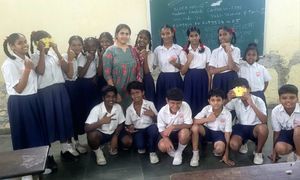
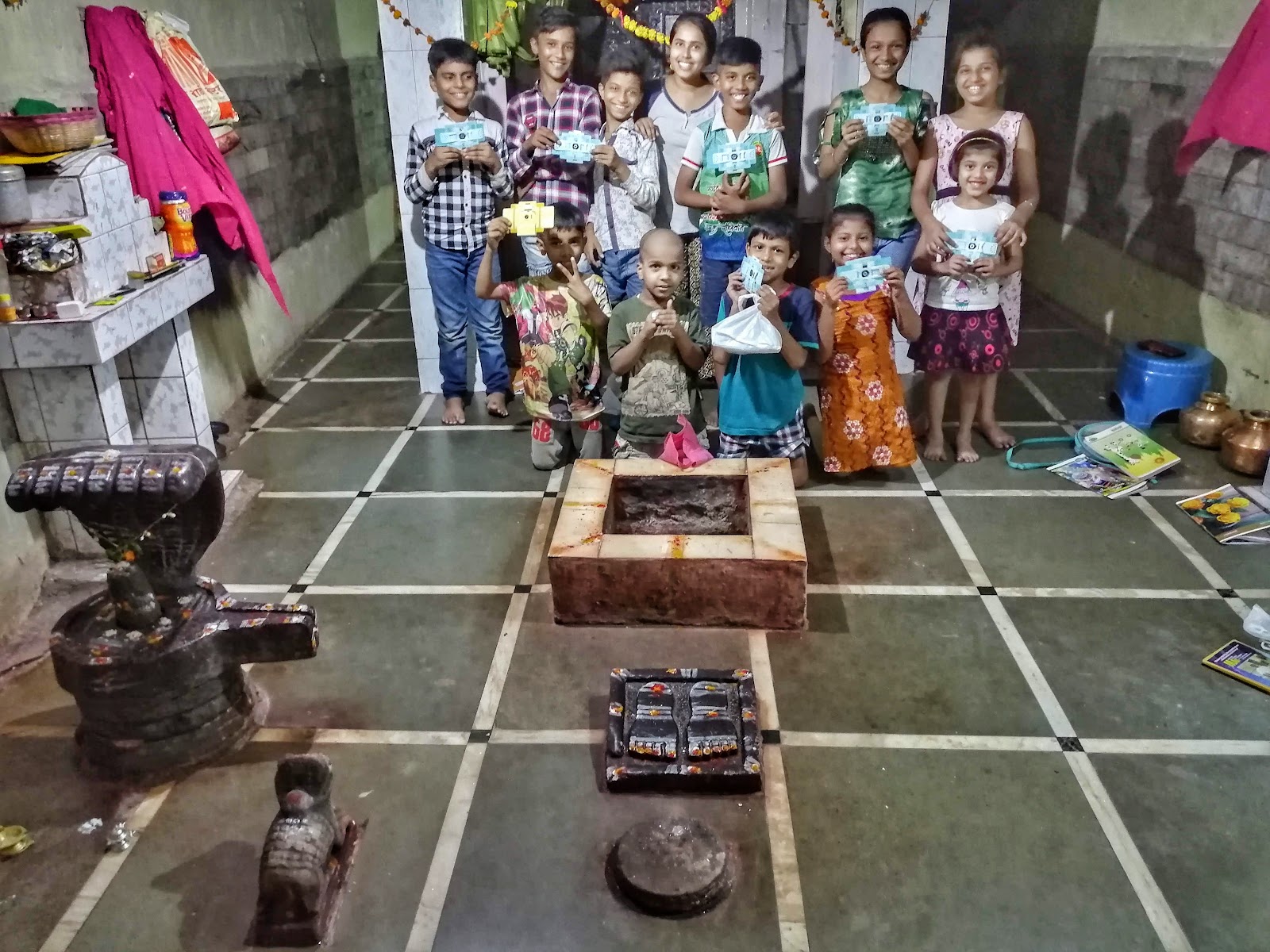
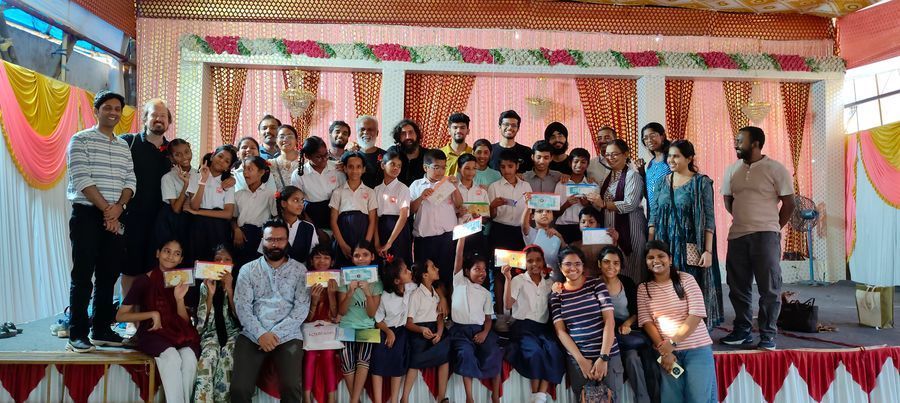
Questions like these and many more filled the air as students from Dharavi participated in a Foldscope workshop. But this wasn’t a regular Foldscope workshop. For the first time ever, a remarkable group of Foldscope superusers gathered under one roof alongside Prof. Manu Prakash, the co-inventor of the Foldscope. The energy was electric.
On a sunny, humid afternoon on March 15, 2025, beneath the shade of a tent on the school grounds, this extraordinary event took place at the very school where I once studied in Dharavi.
Dharavi is one of Asia’s largest slums, where survival often takes priority over curiosity. Yet on this day, the children of Dharavi were about to explore the hidden wonders of their everyday world.
Guided by an incredible team of super-mentors, MO Pandiarajan, Dr. Rafikh Shaikh, Dr. Anupama Harshal, Avanish Singh, Kunal Kanase, Rupali Kadam, Dipali Kadam, Satej Shende, Aarushi Harshal along with students from Tata Institute of Social Sciences, Mumbai and IIT Bombay, and Prof. Manu himself, the students eagerly folded and assembled their own paper microscopes.
Questions like these and many more filled the air as students from Dharavi participated in a Foldscope workshop. But this wasn’t a regular Foldscope workshop. For the first time ever, a remarkable group of Foldscope superusers gathered under one roof alongside Prof. Manu Prakash, the co-inventor of the Foldscope. The energy was electric.
On a sunny, humid afternoon on March 15, 2025, beneath the shade of a tent on the school grounds, this extraordinary event took place at the very school where I once studied in Dharavi.
Dharavi is one of Asia’s largest slums, where survival often takes priority over curiosity. Yet on this day, the children of Dharavi were about to explore the hidden wonders of their everyday world.
Guided by an incredible team of super-mentors, MO Pandiarajan, Dr. Rafikh Shaikh, Dr. Anupama Harshal, Avanish Singh, Kunal Kanase, Rupali Kadam, Dipali Kadam, Satej Shende, Aarushi Harshal along with students from Tata Institute of Social Sciences, Mumbai and IIT Bombay, and Prof. Manu himself, the students eagerly folded and assembled their own paper microscopes.


The atmosphere buzzed with excitement. Enthusiasm and curiosity took over, pushing aside the heat and humidity.
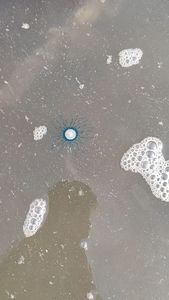
Children put samples like dirt from their nails, an ant, soil, dirty water, the tip of a leaf, and the top of a flower under the microscope. Like most workshops, we also found a fascinating moving sample, a louse and an ant, which filled the students with excitement.
Children put samples like dirt from their nails, an ant, soil, dirty water, the tip of a leaf, and the top of a flower under the microscope. Like most workshops, we also found a fascinating moving sample, a louse and an ant, which filled the students with excitement.


As the number of samples grew, so did the questions. Prof. Manu and the other mentors patiently explained every tiny detail. During one such exploration, while observing an ant’s head, Prof. Manu said, "Cheenti ka dil uske dimag mein hota hai." (An ant’s heart is in its brain). He went on to explain that sometimes we think with our hearts and sometimes with our minds.
Hearing this, one student, Laxmi, thoughtfully responded, "Cheenti toh dono saath mein karti hogi!" (The ant must be using both at the same time!). Her remark was the blend of curiosity with wisdom and it captured the spirit of the workshop.
(You can find a video of the moment here- https://youtube.com/shorts/U_ZHksPrxo8?feature=share)
There was an aha moment when the children discovered that Chandan tika contains plant fibers and isn’t actually a powder. They learned that Chandan is made by rubbing a sandalwood stick on a stone, a realization that shifted their understanding of something so familiar.
Another moment of awe came when the children spotted a tiny thing inside a head louse. We all wondered aloud whether the louse is pregnant!
With patience and playful approach, Prof. Manu joined in each conversation, reasoning with children and gently explaining the tiny details they had observed. The children's eyes lit up with joy, their excitement growing with each new discovery.
Watching him felt like he wasn’t just magnifying the tiny world, but he was magnifying curiosity itself!
I couldn’t help but wonder, every child is born curious, but how many stay that way? Curiosity is easy to spark, but the true magic lies in having the opportunity to chase it further, to keep wondering and to keep adding bricks to an individual’s castle of knowledge.
And I believe Foldscope enables this kind of knowledge building through accessibility and inquiry. As Carl Sagan said, “ Somewhere, something incredible is waiting to be known.” That day, I witnessed incredible things unfolding. All that students needed was a lens and someone to remind them that their curiosity is worth holding onto.
What if every child in this world stayed curious forever?
Happy Foldscoping!
Hearing this, one student, Laxmi, thoughtfully responded, "Cheenti toh dono saath mein karti hogi!" (The ant must be using both at the same time!). Her remark was the blend of curiosity with wisdom and it captured the spirit of the workshop.
(You can find a video of the moment here- https://youtube.com/shorts/U_ZHksPrxo8?feature=share)
There was an aha moment when the children discovered that Chandan tika contains plant fibers and isn’t actually a powder. They learned that Chandan is made by rubbing a sandalwood stick on a stone, a realization that shifted their understanding of something so familiar.
Another moment of awe came when the children spotted a tiny thing inside a head louse. We all wondered aloud whether the louse is pregnant!
With patience and playful approach, Prof. Manu joined in each conversation, reasoning with children and gently explaining the tiny details they had observed. The children's eyes lit up with joy, their excitement growing with each new discovery.
Watching him felt like he wasn’t just magnifying the tiny world, but he was magnifying curiosity itself!
I couldn’t help but wonder, every child is born curious, but how many stay that way? Curiosity is easy to spark, but the true magic lies in having the opportunity to chase it further, to keep wondering and to keep adding bricks to an individual’s castle of knowledge.
And I believe Foldscope enables this kind of knowledge building through accessibility and inquiry. As Carl Sagan said, “ Somewhere, something incredible is waiting to be known.” That day, I witnessed incredible things unfolding. All that students needed was a lens and someone to remind them that their curiosity is worth holding onto.
What if every child in this world stayed curious forever?
Happy Foldscoping!
Sign in to commentNobody has commented yet... Share your thoughts with the author and start the discussion!
 0 Applause
 0 Comments