Leaf Epidermis- LGP '26_B4_D4
 Jun 12, 2026 • 1:35 PM UTC
 India
India 340x Magnification
 Plants
Aarya Agarwal
Learn about the author...
7posts
0comments
0locations
View in Media Gallery
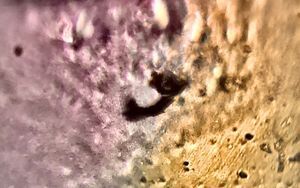
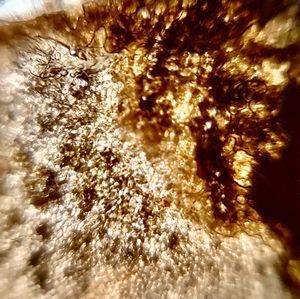
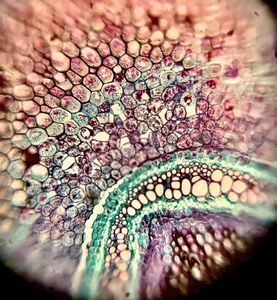
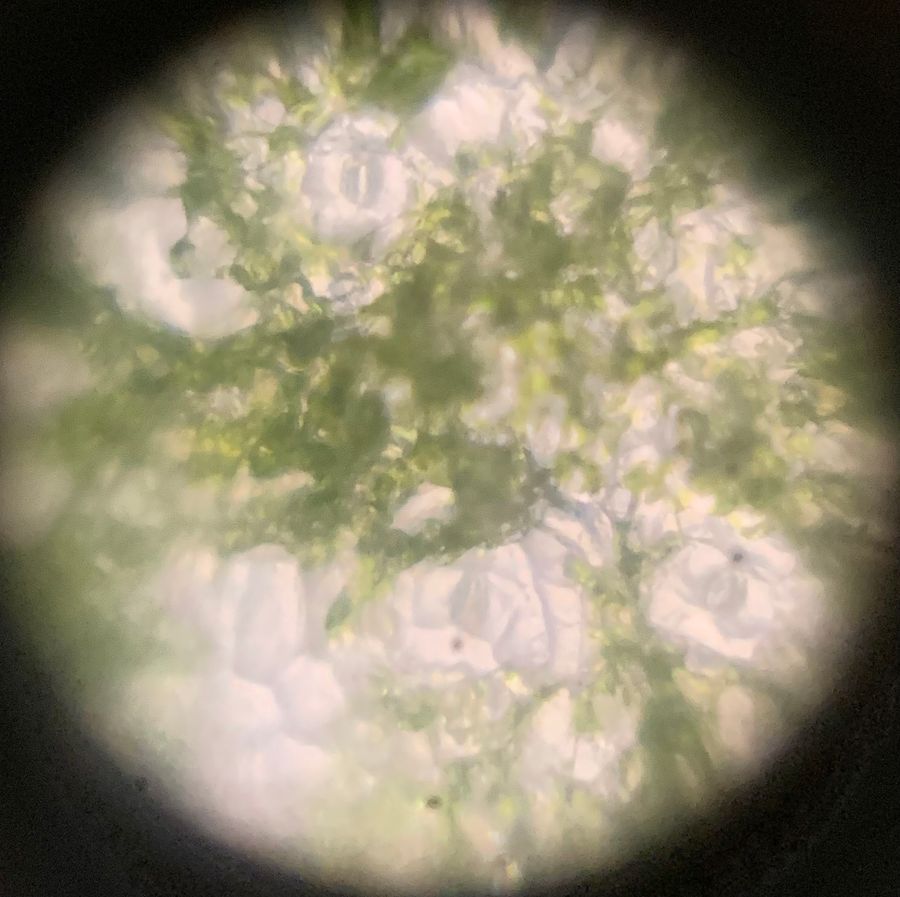
On day 4, another sample we observed was the leaf epidermis. Preparing this slide turned out to be more challenging than I expected because it was quite difficult to peel off a thin enough layer from the leaf. After a few attempts, I managed to get a piece from the underside of the leaf and mounted it on the slide with some difficulty.
Observing the sample was not easy at first. The Foldscope was difficult to focus, and at 50× magnification I couldn't really make out much detail. However, when I switched to 140× and later 340× magnification, the sample suddenly became much more interesting.
The most exciting thing I observed was the stomata. I could see several of them scattered across the epidermis, each surrounded by a pair of guard cells. Until then, stomata had only been diagrams in my biology textbook, so it was amazing to see real ones with my own eyes. I could also make out chlorophyll-containing cells, which added even more detail to the view.
What I enjoyed most about this observation was seeing something I had only studied in theory come to life under the Foldscope. Looking at actual stomata instead of textbook drawings made me appreciate how complex and fascinating plant structures really are. It was one of those moments where biology suddenly felt much more real and tangible, and I would like to add that I could not have seen this particular slide without the professor's help, as she invested a lot of time in pointing out the stomata to me and helping me adjust the slide.
Observing the sample was not easy at first. The Foldscope was difficult to focus, and at 50× magnification I couldn't really make out much detail. However, when I switched to 140× and later 340× magnification, the sample suddenly became much more interesting.
The most exciting thing I observed was the stomata. I could see several of them scattered across the epidermis, each surrounded by a pair of guard cells. Until then, stomata had only been diagrams in my biology textbook, so it was amazing to see real ones with my own eyes. I could also make out chlorophyll-containing cells, which added even more detail to the view.
What I enjoyed most about this observation was seeing something I had only studied in theory come to life under the Foldscope. Looking at actual stomata instead of textbook drawings made me appreciate how complex and fascinating plant structures really are. It was one of those moments where biology suddenly felt much more real and tangible, and I would like to add that I could not have seen this particular slide without the professor's help, as she invested a lot of time in pointing out the stomata to me and helping me adjust the slide.


Sign in to commentNobody has commented yet... Share your thoughts with the author and start the discussion!
 0 Applause
 0 Comments