Pumpkin Flower Pollen- LGP '26_B4_D4
 Jun 12, 2026 • 1:19 PM UTC
 India
India 340x Magnification
 Plants
Aarya Agarwal
Learn about the author...
7posts
0comments
0locations

View in Media Gallery
My drawing of the cells and worms.

View in Media Gallery
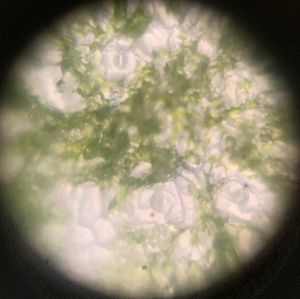
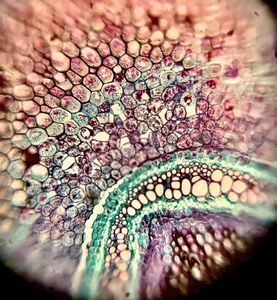
One of the most exciting samples we observed was pollen from a pumpkin flower. Compared to some of the other samples, this one was much easier to observe under the Foldscope, which meant we could spend more time exploring and making interesting observations rather than worrying about finding it.
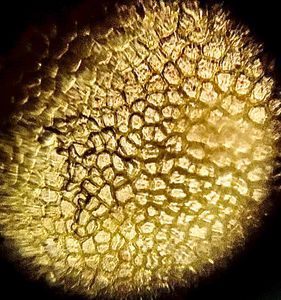
At lower magnifications, I could see tiny yellow pollen grains scattered across the slide. As I increased the magnification, the pollen grains became much clearer, and I could observe their shapes and arrangement in greater detail. It was fascinating to realise that these tiny grains play such an important role in the life cycle of the plant and connect their structure to how it got stuck onto insects during pollination.
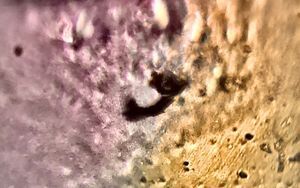
The most surprising part of the observation was that I noticed tiny worm-like organisms among the pollen grains! Watching them across the field of view was completely unexpected and made the sample even more interesting. They appeared segmented, and it was amazing to think that such small creatures could be living in a place I would never have thought to look.
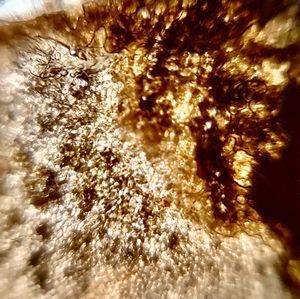
Later, we also used dark-field photography to observe the pollen. This was especially cool because it made the pollen grains stand out against a dark background, revealing details that were difficult to see otherwise. The images looked striking and gave us a different perspective on the sample.
Overall, the pumpkin flower pollen was one of my favourite samples. Not only was it easier to observe than many of the other pollen samples, but it also contained some unexpected visitors that made the whole experience much more memorable.
At lower magnifications, I could see tiny yellow pollen grains scattered across the slide. As I increased the magnification, the pollen grains became much clearer, and I could observe their shapes and arrangement in greater detail. It was fascinating to realise that these tiny grains play such an important role in the life cycle of the plant and connect their structure to how it got stuck onto insects during pollination.
The most surprising part of the observation was that I noticed tiny worm-like organisms among the pollen grains! Watching them across the field of view was completely unexpected and made the sample even more interesting. They appeared segmented, and it was amazing to think that such small creatures could be living in a place I would never have thought to look.
Later, we also used dark-field photography to observe the pollen. This was especially cool because it made the pollen grains stand out against a dark background, revealing details that were difficult to see otherwise. The images looked striking and gave us a different perspective on the sample.
Overall, the pumpkin flower pollen was one of my favourite samples. Not only was it easier to observe than many of the other pollen samples, but it also contained some unexpected visitors that made the whole experience much more memorable.


Sign in to commentNobody has commented yet... Share your thoughts with the author and start the discussion!
 0 Applause
 0 Comments