Potato Cells- LGP '26_B4_D2
 Jun 12, 2026 • 12:56 PM UTC
 India
India 340x Magnification
 Plants
Aarya Agarwal
Learn about the author...
7posts
0comments
0locations
View in Media Gallery
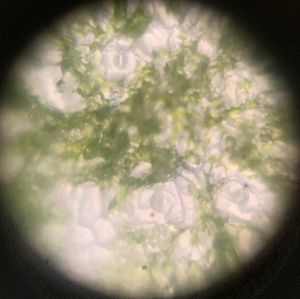
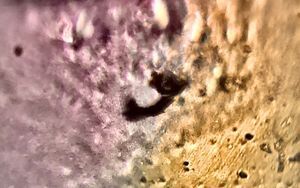
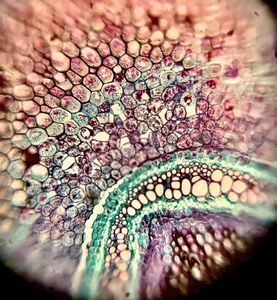
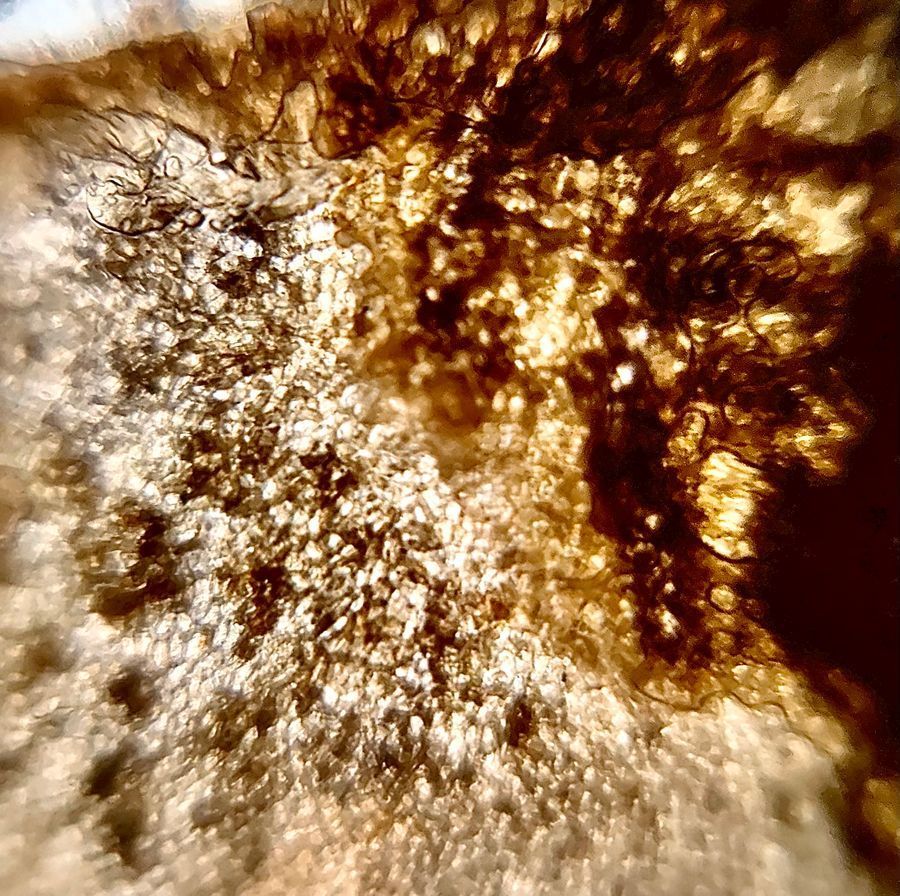
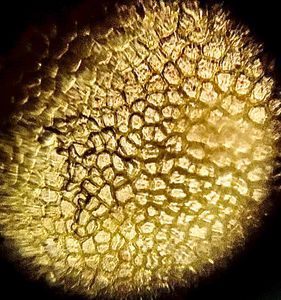
On day 2, we observed potato cells using the Foldscope. Although I was getting more familiar with the Foldscope by now, focusing the sample and finding the right lighting still took a few attempts.
We saw the potato peel by peeling off a bit and preparing a slide, and we also saw the flesh separately by mushing a bit of it onto the slide.
It was definitely much easier seeing the peel cells, according to the majority of our batch.
At lower magnifications, I could see the overall arrangement of the potato tissue, but not many details. As I increased the magnification, the individual cells became much clearer. Their shapes were easier to distinguish, and I could begin to see tiny granules inside some of them. At the highest magnification, these granules stood out much more clearly, and I was able to observe how they were distributed within the cells.
One of the problems I faced was distinguishing between the cells and the air bubbles. Many a time, I got really excited upon finding what I was sure was an amazing specimen of a cell, only for the professor to gently tell me that this was not so.
It was interesting to compare the view at different magnifications. Each increase in magnification revealed details that had been impossible to see before. What first looked like a simple patch of tissue gradually turned into a collection of distinct cells with their own structures. This made me appreciate how much information can be hidden inside something as ordinary as a potato.
It was nice to see the colours, structures, and level of how fine the details were gradually change with each progressive magnification lens.
We saw the potato peel by peeling off a bit and preparing a slide, and we also saw the flesh separately by mushing a bit of it onto the slide.
It was definitely much easier seeing the peel cells, according to the majority of our batch.
At lower magnifications, I could see the overall arrangement of the potato tissue, but not many details. As I increased the magnification, the individual cells became much clearer. Their shapes were easier to distinguish, and I could begin to see tiny granules inside some of them. At the highest magnification, these granules stood out much more clearly, and I was able to observe how they were distributed within the cells.
One of the problems I faced was distinguishing between the cells and the air bubbles. Many a time, I got really excited upon finding what I was sure was an amazing specimen of a cell, only for the professor to gently tell me that this was not so.
It was interesting to compare the view at different magnifications. Each increase in magnification revealed details that had been impossible to see before. What first looked like a simple patch of tissue gradually turned into a collection of distinct cells with their own structures. This made me appreciate how much information can be hidden inside something as ordinary as a potato.
It was nice to see the colours, structures, and level of how fine the details were gradually change with each progressive magnification lens.


_300x300.jpeg)


Sign in to commentNobody has commented yet... Share your thoughts with the author and start the discussion!
 0 Applause
 0 Comments