Tomato Cells- LGP '26_B4_D2
 Jun 15, 2026 • 7:53 AM UTC
 India
India 340x Magnification
 Plants
Aarya Agarwal
Learn about the author...
7posts
0comments
0locations
View in Media Gallery
My drawing of the tomato cells at different magnifications.

View in Media Gallery
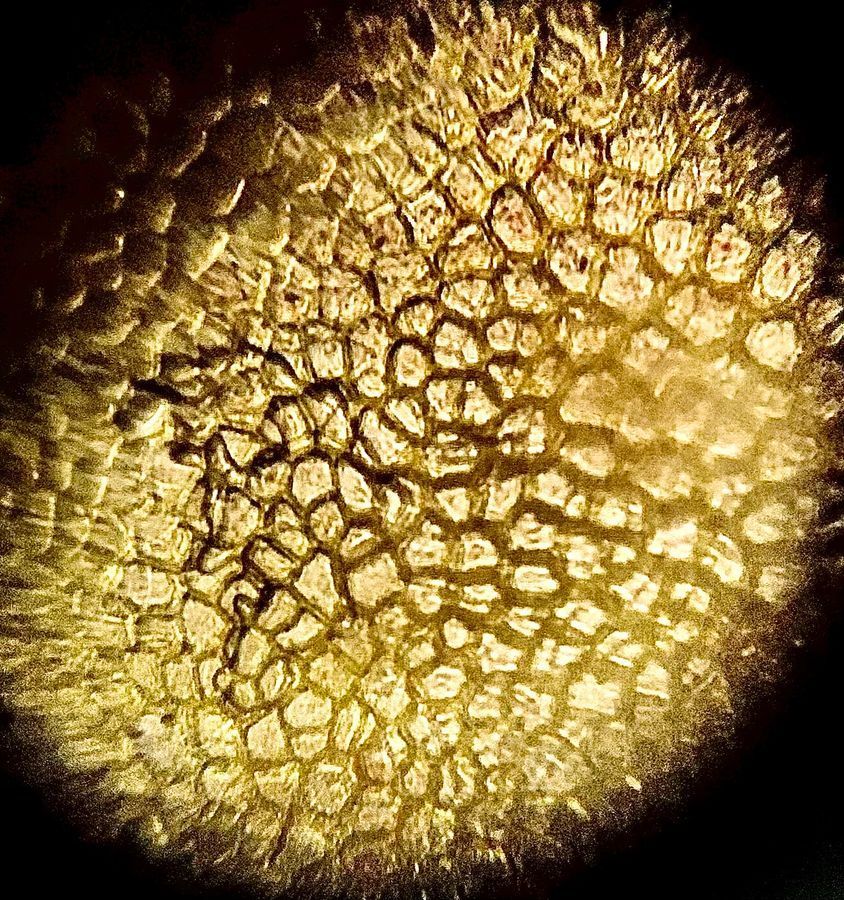
On day 2, we then moved on to observing tomato cells. After observing onion and potato cells, I was curious to see whether tomato cells would look similar or completely different.
As usual, getting the Foldscope focused took a bit of patience. The image would sometimes be too dark or too blurry, and I had to keep adjusting the lighting and focus. Once I managed to get a good field, I could see the tomato tissue much more clearly.
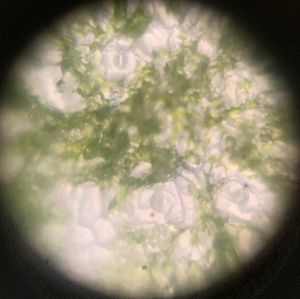
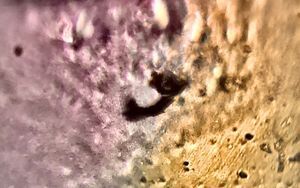
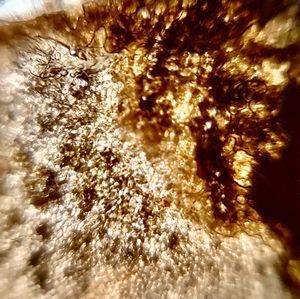
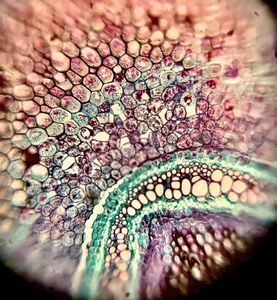
At lower magnifications, I could make out the general arrangement of the cells. As I increased the magnification, individual cells became easier to distinguish, and I could observe more details within the tissue.
I really loved how very colourful this sample was, and seeing the vast yellow fields and scanning them and zooming into them made this one of my favourite slides. Comparing the views at different magnifications was fascinating because each level revealed something new that I hadn't noticed before. The cells got clearer, the divisions become more apparent, and I saw how many cells it truly takes to constitute what we consider a tiny slice of tomato.
What I found most interesting was comparing the tomato cells with the onion and potato cells we had observed earlier. Even though all three samples came from plants, their cells did not look exactly the same. Their shapes, arrangements, and overall appearance were noticeably different.
This led to an important discussion. If cells from different parts of plants can look so different from one another, then bacterial cells can also vary greatly between species. That means we cannot simply assume that all infections are the same. We learned that taking antibiotics without knowing the causative agent is not a good idea, because different microbes may require different treatments. Understanding what is actually causing an infection is an important part of treating it correctly.
As usual, getting the Foldscope focused took a bit of patience. The image would sometimes be too dark or too blurry, and I had to keep adjusting the lighting and focus. Once I managed to get a good field, I could see the tomato tissue much more clearly.
At lower magnifications, I could make out the general arrangement of the cells. As I increased the magnification, individual cells became easier to distinguish, and I could observe more details within the tissue.
I really loved how very colourful this sample was, and seeing the vast yellow fields and scanning them and zooming into them made this one of my favourite slides. Comparing the views at different magnifications was fascinating because each level revealed something new that I hadn't noticed before. The cells got clearer, the divisions become more apparent, and I saw how many cells it truly takes to constitute what we consider a tiny slice of tomato.
What I found most interesting was comparing the tomato cells with the onion and potato cells we had observed earlier. Even though all three samples came from plants, their cells did not look exactly the same. Their shapes, arrangements, and overall appearance were noticeably different.
This led to an important discussion. If cells from different parts of plants can look so different from one another, then bacterial cells can also vary greatly between species. That means we cannot simply assume that all infections are the same. We learned that taking antibiotics without knowing the causative agent is not a good idea, because different microbes may require different treatments. Understanding what is actually causing an infection is an important part of treating it correctly.


Sign in to commentNobody has commented yet... Share your thoughts with the author and start the discussion!

 0 Applause
 0 Comments