Fern Rhizome- LGP '26_B4_D1
 Jun 10, 2026 • 11:43 AM UTC
 India
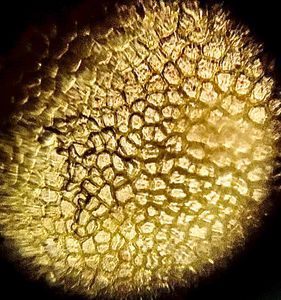
India 340x Magnification
 Plants
Aarya Agarwal
Learn about the author...
7posts
0comments
0locations
View in Media Gallery
Hey, this is Aarya, and I'm really thrilled to be writing my first ever blog post for this course- Exploring The Microcosm! I had been looking forward to this course for a while now, as my friends who'd had it in previous weeks just wouldn't stop raving about how fun and hands on it was!
On 8th June, 2026, we had great fun exploring two samples- of a Fern Rhizome and an onion. It was the very first time we'd used and interacted with a foldscope- an excellent and ridiculously simple device invented by Manu Prakash. At first, we had trouble navigating the foldscope- from setting the slide and adjusting the focus, to later clicking clear pictures and orienting the device to where the light hit it best.
After overcoming various technical difficulties, we moved on to the actual observing, analysing, and documentation part of it. It was truly mind-blowing to watch a seemingly doubtful and insignificant-looking blob transform into a shockingly clear and enlarged version of the sample.
The Fern Rhizome at different magnifications:
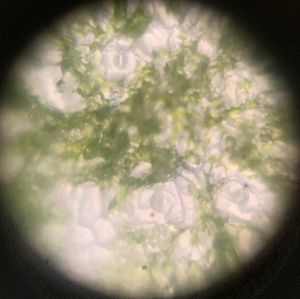
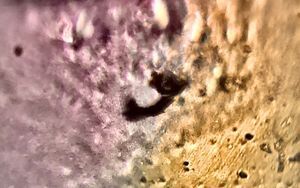
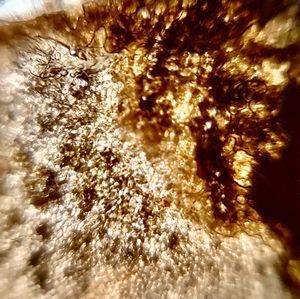
50x- At this magnification, the overall structure of the fern rhizome was visible. One could easily notice and compare the cells in different regions- for example, the cells in the vascular area had comparitively thicker cell walls than those in the cortex. The different tissue regions could be distinguished, including the outer cortex and the central vascular region. The arrangement of tissues appeared as distinct zones, and the staining made differentiation easier, but individual cells were difficult to observe clearly. The vascular bundles formed a noticeable pattern within the rhizome.
140x- At this magnification, cellular organization became much clearer. Groups of cells with different sizes and staining patterns could be observed. The cortex surrounding the central region was more distinct, and the vascular tissue appeared as a denser structure in the centre. Cell walls became easier to identify, and one distinct observation was the difference in densities of how closely the cells were packed in different regions.
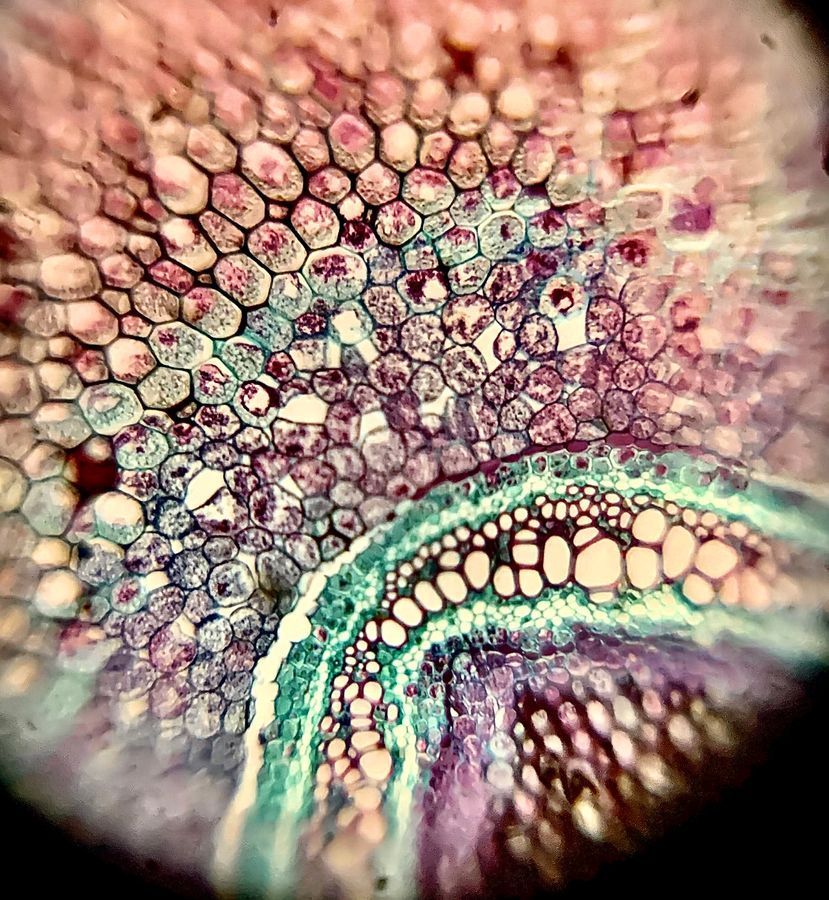
340x- At this magnification, we can see the details getting progressively finer. Individual cells and tissue details were visible. Thick-walled supporting cells in the centre, which I think could be schlerenchyma, could be distinguished from the surrounding thin-walled parenchyma cells. The vascular region showed tightly packed cells involved in transport and support. At this level, the differences in cell shape and wall thickness became more apparent, and I realized the complexity of the Fern Rhizome's internal structure.
On 8th June, 2026, we had great fun exploring two samples- of a Fern Rhizome and an onion. It was the very first time we'd used and interacted with a foldscope- an excellent and ridiculously simple device invented by Manu Prakash. At first, we had trouble navigating the foldscope- from setting the slide and adjusting the focus, to later clicking clear pictures and orienting the device to where the light hit it best.
After overcoming various technical difficulties, we moved on to the actual observing, analysing, and documentation part of it. It was truly mind-blowing to watch a seemingly doubtful and insignificant-looking blob transform into a shockingly clear and enlarged version of the sample.
The Fern Rhizome at different magnifications:
50x- At this magnification, the overall structure of the fern rhizome was visible. One could easily notice and compare the cells in different regions- for example, the cells in the vascular area had comparitively thicker cell walls than those in the cortex. The different tissue regions could be distinguished, including the outer cortex and the central vascular region. The arrangement of tissues appeared as distinct zones, and the staining made differentiation easier, but individual cells were difficult to observe clearly. The vascular bundles formed a noticeable pattern within the rhizome.
140x- At this magnification, cellular organization became much clearer. Groups of cells with different sizes and staining patterns could be observed. The cortex surrounding the central region was more distinct, and the vascular tissue appeared as a denser structure in the centre. Cell walls became easier to identify, and one distinct observation was the difference in densities of how closely the cells were packed in different regions.
340x- At this magnification, we can see the details getting progressively finer. Individual cells and tissue details were visible. Thick-walled supporting cells in the centre, which I think could be schlerenchyma, could be distinguished from the surrounding thin-walled parenchyma cells. The vascular region showed tightly packed cells involved in transport and support. At this level, the differences in cell shape and wall thickness became more apparent, and I realized the complexity of the Fern Rhizome's internal structure.
_900x900.jpeg)
View in Media Gallery
My drawings and observations of the Fern Rhizome at all three magnifications.


All in all, this was a great first sample to observe, and I had a lot of fun seeing it specially because it was so very colourful! The joy of seeing the cells with an unfathomable clarity as we changed each lens was what made me sure that this would definitely be a course I'd enjoy and look forward to each day, and instilled in me a sort of hunger to explore the next samples.
Sign in to commentNobody has commented yet... Share your thoughts with the author and start the discussion!
 0 Applause
 0 Comments