Dieffenbachia - The ten-thousand-year plant
 Jul 10, 2025 • 11:49 AM UTC
 Vietnam
 50x Magnification
 Plants
Foldscope Vietnam
Foldscope Vietnam is a non-governmental organisation with the goal of universalising science, inspiring exploration, and raising awareness of global issues for young people, regardless of all socio-economic background, through Foldscope activities. Our posts are collection of speciments from the Microcosmos Vietnam Community.
7posts
3comments
2locations
View in Media Gallery
Dieffenbachia is the ten-thousand-year plant, and its name carries a meaning that most people can likely guess - it symbolizes longevity. Whether it’s luck, health, or finances, those graceful green leaves hold the hope that their owner may forever sustain what they have.
Because of this, Dieffenbachia is often known for its spiritual significance, serving many feng shui purposes. But of course, everything has multiple fascinating aspects worth exploring, so now, let’s continue to explore it in the science aspect.
Overview & Introduction
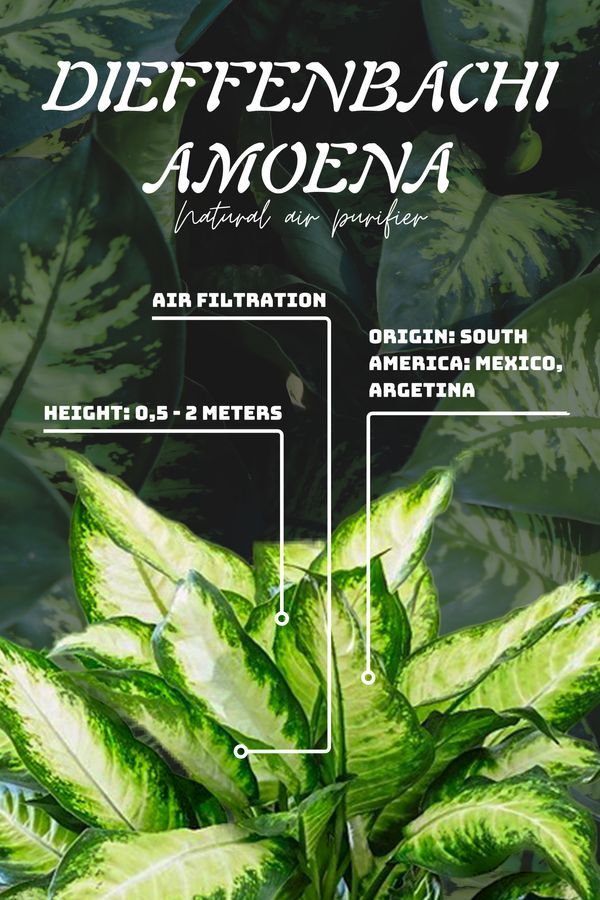
Dieffenbachia, scientific name Dieffenbachia Amoena, belongs to the Araceae family. It first appeared in the tropical forests of South America, specifically in what is now Mexico and southern Argentina. This is a decorative plant known for its effective air-purifying capabilities, but it can also be harmful to humans due to many highly toxic compounds hidden beneath its lush green leaves with tiger-like artistic patterns.
Because of this, Dieffenbachia is often known for its spiritual significance, serving many feng shui purposes. But of course, everything has multiple fascinating aspects worth exploring, so now, let’s continue to explore it in the science aspect.
Overview & Introduction
Dieffenbachia, scientific name Dieffenbachia Amoena, belongs to the Araceae family. It first appeared in the tropical forests of South America, specifically in what is now Mexico and southern Argentina. This is a decorative plant known for its effective air-purifying capabilities, but it can also be harmful to humans due to many highly toxic compounds hidden beneath its lush green leaves with tiger-like artistic patterns.
View in Media Gallery
Appearance Characteristics
Dieffenbachia is a monocot plant, evident through its parallel leaf veins and clustered root growth. As part of the Araceae family, its leaves grow in clusters, are soft, and remain green year-round. There are over 50 types of Dieffenbachia, but the two most common are the sheath-type and the spotted-leaf type. Notably, Dieffenbachia never develops a trunk.
The most prominent feature of the sheath-type is the greenish-white coloration near the leaf veins. This type generally grows from 0.5 to 2 meters tall, with stems about 1 - 1.5 cm thick. The leaves are lance-shaped, about 30 cm long and 5 - 7 cm wide.
Apart from the characteristic small spots around the leaf, the spotted-leaf variety is a vine rather than an upright plant like the sheath-type. This variety typically reaches about 35 - 40 cm in height, with stems 0.5 - 0.8 cm thick, and leaves ranging in size from 3.5 to 12 cm. It is also known as “crawling Dieffenbachia” because the leaf’s shape and size resemble a cow’s tongue.
Dieffenbachia does bloom, though rarely indoors. Each plant grows only one flower. The flower is green, large, and surrounds the pistil. The pistil is white and spindle-shaped. The fruit is small, fleshy, round, and turns red when ripe.
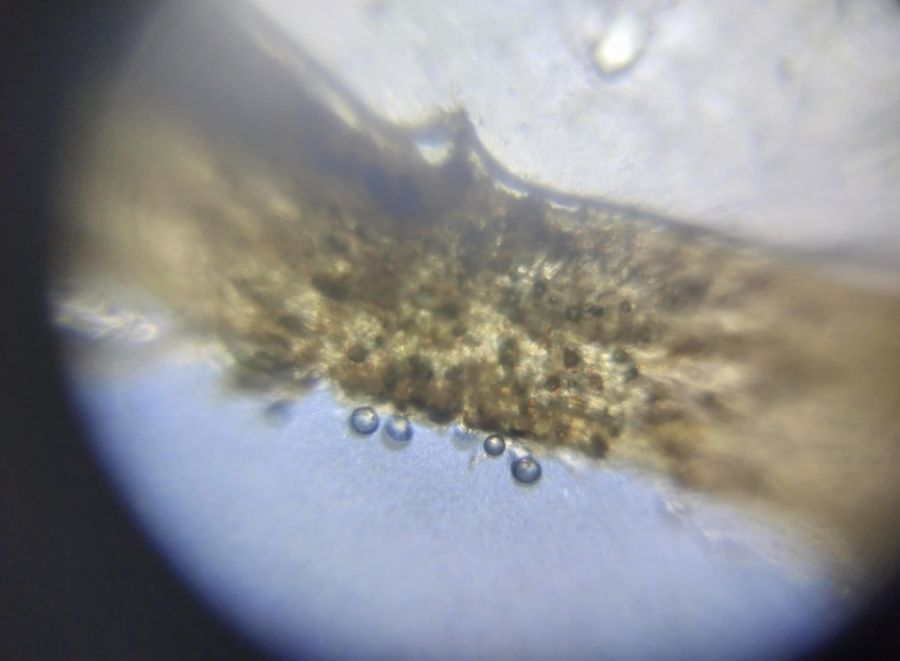
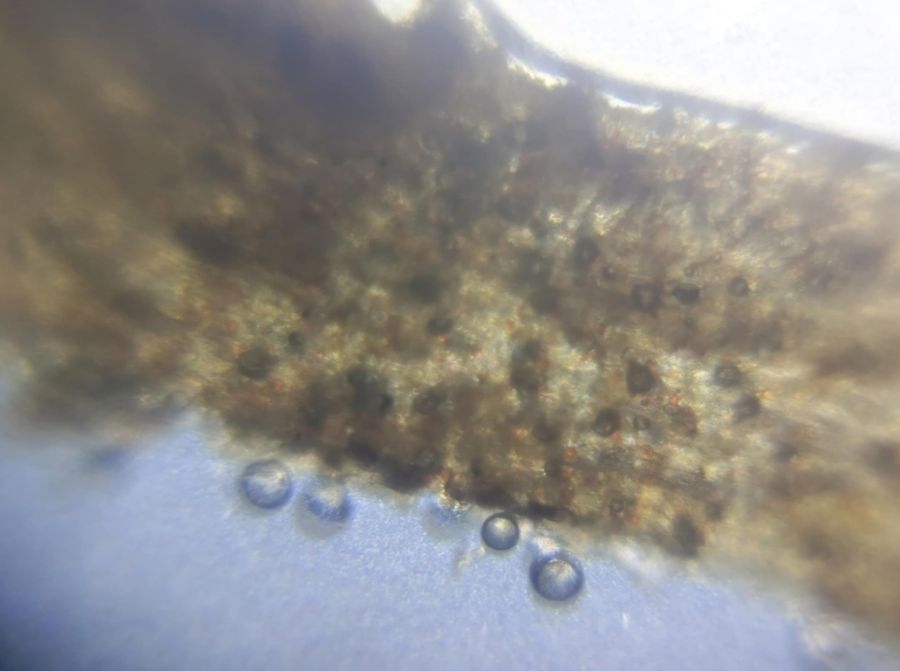
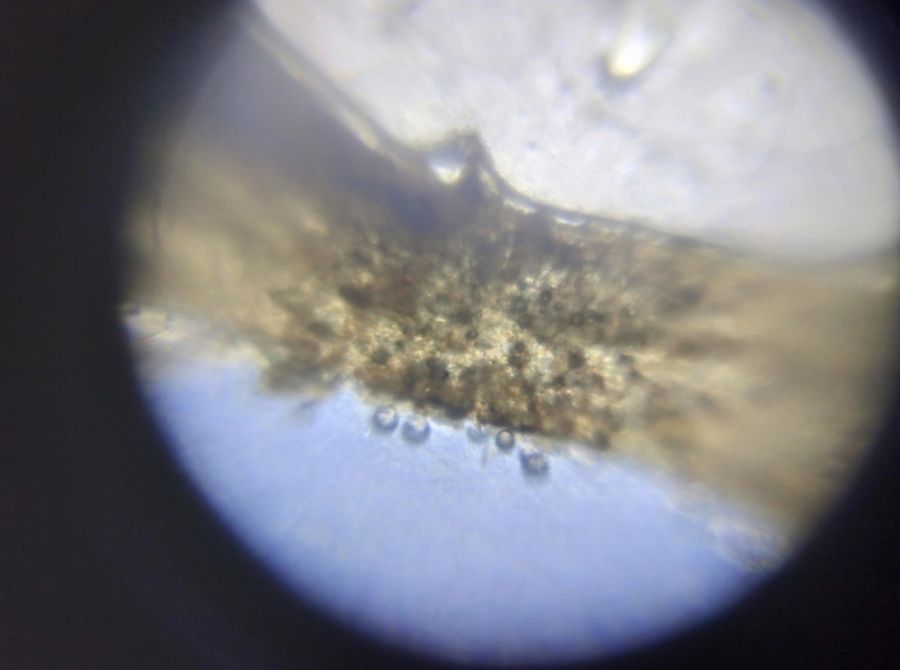
This is a section of a Dieffenbachia (dumb cane) root. The dark brown spots are tightly packed root cells that still leave small gaps for air to pass through. Scattered throughout the root are black specks – these are starch storage sites that help maintain energy for the cells. If you look closely, you’ll notice orange dots that indicate areas rich in pigments.
Dieffenbachia is a monocot plant, evident through its parallel leaf veins and clustered root growth. As part of the Araceae family, its leaves grow in clusters, are soft, and remain green year-round. There are over 50 types of Dieffenbachia, but the two most common are the sheath-type and the spotted-leaf type. Notably, Dieffenbachia never develops a trunk.
The most prominent feature of the sheath-type is the greenish-white coloration near the leaf veins. This type generally grows from 0.5 to 2 meters tall, with stems about 1 - 1.5 cm thick. The leaves are lance-shaped, about 30 cm long and 5 - 7 cm wide.
Apart from the characteristic small spots around the leaf, the spotted-leaf variety is a vine rather than an upright plant like the sheath-type. This variety typically reaches about 35 - 40 cm in height, with stems 0.5 - 0.8 cm thick, and leaves ranging in size from 3.5 to 12 cm. It is also known as “crawling Dieffenbachia” because the leaf’s shape and size resemble a cow’s tongue.
Dieffenbachia does bloom, though rarely indoors. Each plant grows only one flower. The flower is green, large, and surrounds the pistil. The pistil is white and spindle-shaped. The fruit is small, fleshy, round, and turns red when ripe.
This is a section of a Dieffenbachia (dumb cane) root. The dark brown spots are tightly packed root cells that still leave small gaps for air to pass through. Scattered throughout the root are black specks – these are starch storage sites that help maintain energy for the cells. If you look closely, you’ll notice orange dots that indicate areas rich in pigments.
View in Media Gallery
Dieffenbachia is often used as an ornamental plant due to its preference for shade and cool temperatures.
Biological Characteristics
Dieffenbachia is known for filtering harmful gases, particularly volatile organic compounds (VOCs) such as toluene and xylene. Its leaves absorb harmful gases through stomata and help remove them from the environment.
Despite its air-purifying abilities, Dieffenbachia is also potentially harmful to humans. Specifically, its sap contains calcium oxalate, a compound that can irritate mucous membranes and lead to swelling and inflammation of the tongue and throat. As a member of the Araceae family, the presence of calcium oxalate crystals allows it to pierce through skin layers, causing itching or rashes upon contact. Therefore, people should be careful not to let the skin come into direct contact with its sap or ingest any part of the plant.
Biological Characteristics
Dieffenbachia is known for filtering harmful gases, particularly volatile organic compounds (VOCs) such as toluene and xylene. Its leaves absorb harmful gases through stomata and help remove them from the environment.
Despite its air-purifying abilities, Dieffenbachia is also potentially harmful to humans. Specifically, its sap contains calcium oxalate, a compound that can irritate mucous membranes and lead to swelling and inflammation of the tongue and throat. As a member of the Araceae family, the presence of calcium oxalate crystals allows it to pierce through skin layers, causing itching or rashes upon contact. Therefore, people should be careful not to let the skin come into direct contact with its sap or ingest any part of the plant.
View in Media Gallery
Additionally, Dieffenbachia contains several phytochemicals such as alkaloids, saponins, and glycosides - compounds that can cause serious sap poisoning. When a person ingests the sap or other parts of the plant, these chemicals interfere with the function and development of essential amino acids in the human body. Two of the toxic compounds in Dieffenbachia sap are glycoside and saponin, which cause harm by interacting with the enzyme cytosolic beta-glucosidase (GBA3) - an enzyme used to detoxify glycosides - and neurotransmitter-related proteins.
Impact on the Ecosystem
As a plant containing many toxic compounds, Dieffenbachia is not a major part of the food chain. However, it is still an autotroph that insects and bugs feed on. Since it requires light for growth, Dieffenbachia can be invasive. In the wild, it often grows near rivers and streams, where high humidity and abundant sunlight allow the plant to photosynthesize effectively.
Impact on the Ecosystem
As a plant containing many toxic compounds, Dieffenbachia is not a major part of the food chain. However, it is still an autotroph that insects and bugs feed on. Since it requires light for growth, Dieffenbachia can be invasive. In the wild, it often grows near rivers and streams, where high humidity and abundant sunlight allow the plant to photosynthesize effectively.
Sign in to commentNobody has commented yet... Share your thoughts with the author and start the discussion!
 0 Applause
 0 Comments