Mystery of Tangerine
 May 27, 2025 • 3:05 PM UTC
 Vietnam
 50x Magnification
 Unknown
Foldscope Vietnam
Foldscope Vietnam is a non-governmental organisation with the goal of universalising science, inspiring exploration, and raising awareness of global issues for young people, regardless of all socio-economic background, through Foldscope activities. Our posts are collection of speciments from the Microcosmos Vietnam Community.
7posts
3comments
2locations

View in Media Gallery
Radiant June arrives, bringing along blazing summer days, what could be better than cooling down with a special summer's star that's both sweet and nutritious? None other than Tangerine – also known as Citrus reticulata, a member of the Rutaceae family and the Citrus genus!
Introduction
The mandarin tree – a medium-sized woody plant with a slender appearance yet remarkable resilience – is characterized by its thorny branches and trunk, with sharp points that seem to guard its rough bark. Its leaves are small, glossy green, and have short petioles, sometimes with tiny wings that add delicate accents to the smooth green foliage. Mandarin flowers are modest in appearance, often growing alone or in small clusters at leaf axils, giving off a light, fresh fragrance. When it reaches its peak fruiting season, a mature mandarin tree can yield up to 79 kilograms of fruit.
Introduction
The mandarin tree – a medium-sized woody plant with a slender appearance yet remarkable resilience – is characterized by its thorny branches and trunk, with sharp points that seem to guard its rough bark. Its leaves are small, glossy green, and have short petioles, sometimes with tiny wings that add delicate accents to the smooth green foliage. Mandarin flowers are modest in appearance, often growing alone or in small clusters at leaf axils, giving off a light, fresh fragrance. When it reaches its peak fruiting season, a mature mandarin tree can yield up to 79 kilograms of fruit.

View in Media Gallery
Few people know that behind its humble appearance, the mandarin is actually one of the ancestral species of citrus fruits – the progenitor of many valuable commercial hybrids such as sour oranges, sweet oranges, various limes, and grapefruits. Although the original fruit had a bitter taste, through natural processes and hybridization with pomelo, it evolved into the sweet, pleasant flavor found in most mandarin varieties today. Amidst a wide array of fruits, the mandarin retains its unique charm: simple, distinct, and quietly captivating.
Biological Characteristics
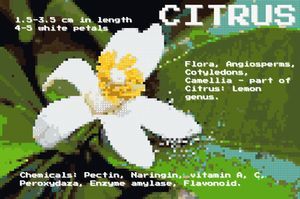
Mandarin (Citrus reticulata) is a small, flattened citrus fruit that is easier to peel than an orange. Thanks to its thin, easily separable skin, sweet flavor, and few seeds, it is widely favored. The mandarin tree typically grows to a height of 7–8 meters, with white flowers that appear either singly or in small clusters. One notable feature is its ability to self-pollinate or produce seedless fruit without the help of insects.
Biological Characteristics
Mandarin (Citrus reticulata) is a small, flattened citrus fruit that is easier to peel than an orange. Thanks to its thin, easily separable skin, sweet flavor, and few seeds, it is widely favored. The mandarin tree typically grows to a height of 7–8 meters, with white flowers that appear either singly or in small clusters. One notable feature is its ability to self-pollinate or produce seedless fruit without the help of insects.

View in Media Gallery
In terms of nutrition, mandarins are composed of about 85% water and are a good source of vitamin C, which helps boost the immune system and acts as an antioxidant. Not only the juicy flesh but also the peel, seeds, and pith of the mandarin contain valuable compounds such as polyphenols, flavonoids, essential oils, organic acids, and pectin. These are commonly used in the production of functional foods and cosmetics.
The importance of tangerines
Tangerines are considered a “national fruit” in many regions thanks to their high yield and early harvest time.
They have a sweet, pleasant flavor and are a rich source of vitamin C – a vital micronutrient that helps boost the immune system, fight oxidation, and aid iron absorption. Moreover, the peel, seeds, and pith of tangerines contain valuable bioactive compounds such as flavonoids, polyphenols, and natural essential oils. These not only provide nutritional benefits but are also being researched for applications in functional foods, cosmetics, and pharmaceuticals.
The importance of tangerines
Tangerines are considered a “national fruit” in many regions thanks to their high yield and early harvest time.
They have a sweet, pleasant flavor and are a rich source of vitamin C – a vital micronutrient that helps boost the immune system, fight oxidation, and aid iron absorption. Moreover, the peel, seeds, and pith of tangerines contain valuable bioactive compounds such as flavonoids, polyphenols, and natural essential oils. These not only provide nutritional benefits but are also being researched for applications in functional foods, cosmetics, and pharmaceuticals.

View in Media Gallery
Tangerines are also a key ingredient in the processing industry: from juices, jams, and candies to essential oils.
Thanks to their diverse applications and high nutritional value, tangerines are increasingly asserting their role as an essential fruit crop, significantly contributing to food security and rural development in Vietnam.
Thanks to their diverse applications and high nutritional value, tangerines are increasingly asserting their role as an essential fruit crop, significantly contributing to food security and rural development in Vietnam.
Sign in to commentNobody has commented yet... Share your thoughts with the author and start the discussion!
 0 Applause
 0 Comments