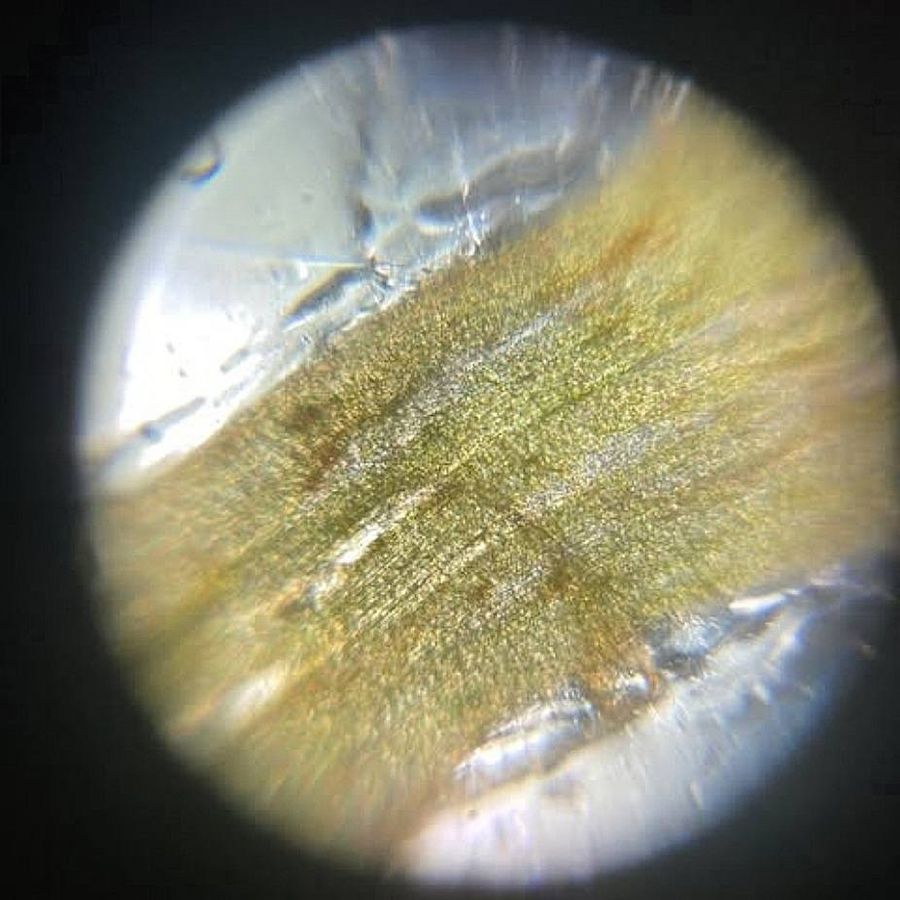
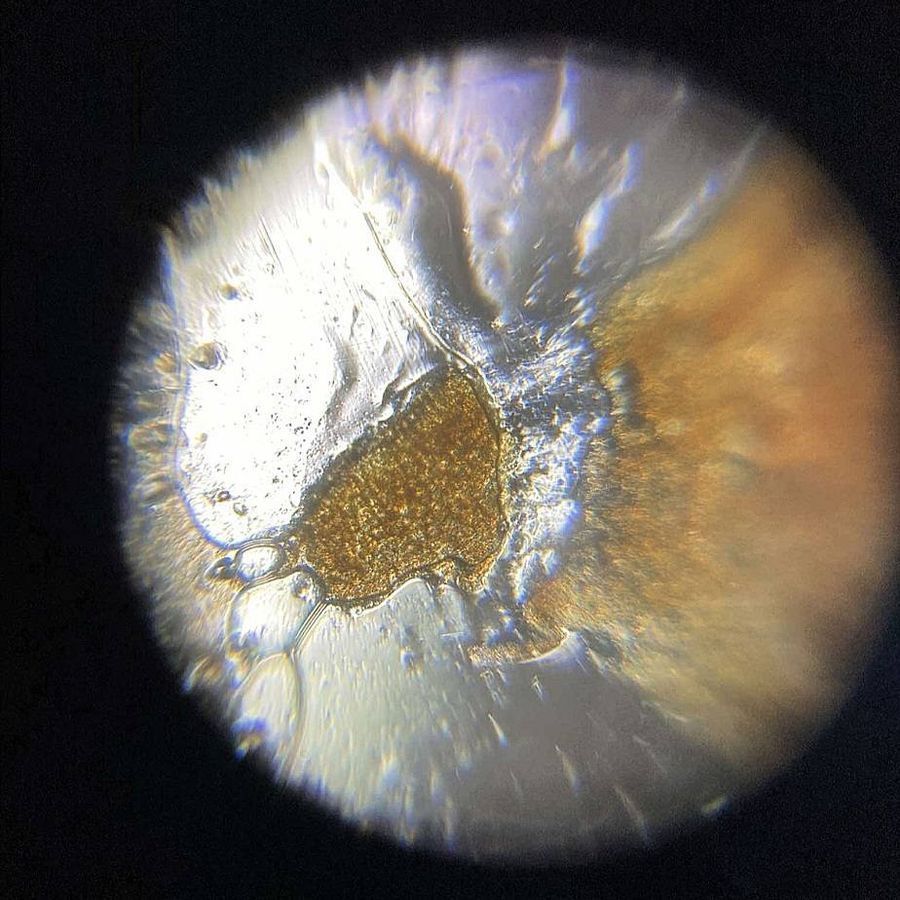
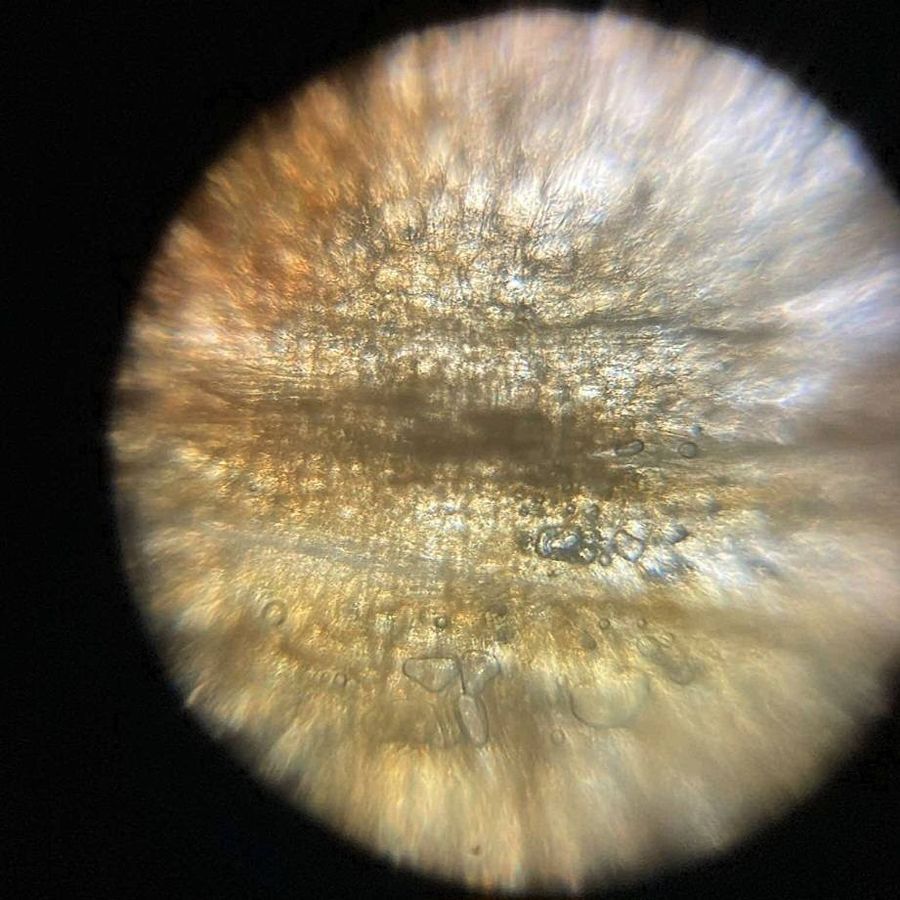
Rambutan fruit in Foldscope lens
 May 30, 2025 • 11:30 AM UTC
 Vietnam
 50x Magnification
 Plants
Foldscope Vietnam
Foldscope Vietnam is a non-governmental organisation with the goal of universalising science, inspiring exploration, and raising awareness of global issues for young people, regardless of all socio-economic background, through Foldscope activities. Our posts are collection of speciments from the Microcosmos Vietnam Community.
7posts
3comments
2locations
View in Media Gallery
The rambutan - or as we like to call it, “the hairy fruit” - is famous for its sweet, refreshing flavor, making it a perfect treat for beating the heat during hot, dry summers. But here's the twist: despite being so juicy, rambutan is actually considered a "heaty" fruit due to its high sugar content.
Let’s dive into details of this summer’s fruit.
Overview
Rambutan (Nephelium lappaceum) is a fruit-bearing tree in the soapberry family (Sapindaceae), closely related to lychees and longans. It belongs to the genus Nephelium and originates from Southeast Asia, particularly Malaysia and Indonesia. The name “rambutan” comes from the Malay word for “hair,” which perfectly describes the fruit’s appearance with its soft, hairy spikes.
Today, rambutan is widely grown across Southeast Asia, including Vietnam, Thailand, Laos, Cambodia, the Philippines, and even parts of southern China, Sri Lanka, India, Africa, Central America, and the Caribbean. In Vietnam, rambutan thrives in regions like the Đồng Nai River basin, the southern and central regions, and the Central Highlands
Let’s dive into details of this summer’s fruit.
Overview
Rambutan (Nephelium lappaceum) is a fruit-bearing tree in the soapberry family (Sapindaceae), closely related to lychees and longans. It belongs to the genus Nephelium and originates from Southeast Asia, particularly Malaysia and Indonesia. The name “rambutan” comes from the Malay word for “hair,” which perfectly describes the fruit’s appearance with its soft, hairy spikes.
Today, rambutan is widely grown across Southeast Asia, including Vietnam, Thailand, Laos, Cambodia, the Philippines, and even parts of southern China, Sri Lanka, India, Africa, Central America, and the Caribbean. In Vietnam, rambutan thrives in regions like the Đồng Nai River basin, the southern and central regions, and the Central Highlands
View in Media Gallery
Appearance
Rambutan trees are medium-sized evergreens that can grow up to 12 - 20 meters in the wild. However, vegetatively propagated varieties are usually smaller, about 4 - 7 meters tall, with wide canopies.
The leaves grow alternately and are pinnately compound, ranging from 10 to 30 cm long. The upper surface may be smooth or hairy along the midrib, while the underside varies depending on the species, sometimes featuring domatia (tiny structures that provide protection against insects). The leaf tips can be rounded or sharply pointed, with gently to clearly curved veins and coarse net-like patterns.
Rambutan flowers grow in clusters at the ends of branches and are small, white, pale green, or light yellow, with 4 - 5 united sepals. Like many other flowers, they give off a faint scent to attract pollinators.
Rambutan trees are medium-sized evergreens that can grow up to 12 - 20 meters in the wild. However, vegetatively propagated varieties are usually smaller, about 4 - 7 meters tall, with wide canopies.
The leaves grow alternately and are pinnately compound, ranging from 10 to 30 cm long. The upper surface may be smooth or hairy along the midrib, while the underside varies depending on the species, sometimes featuring domatia (tiny structures that provide protection against insects). The leaf tips can be rounded or sharply pointed, with gently to clearly curved veins and coarse net-like patterns.
Rambutan flowers grow in clusters at the ends of branches and are small, white, pale green, or light yellow, with 4 - 5 united sepals. Like many other flowers, they give off a faint scent to attract pollinators.
View in Media Gallery
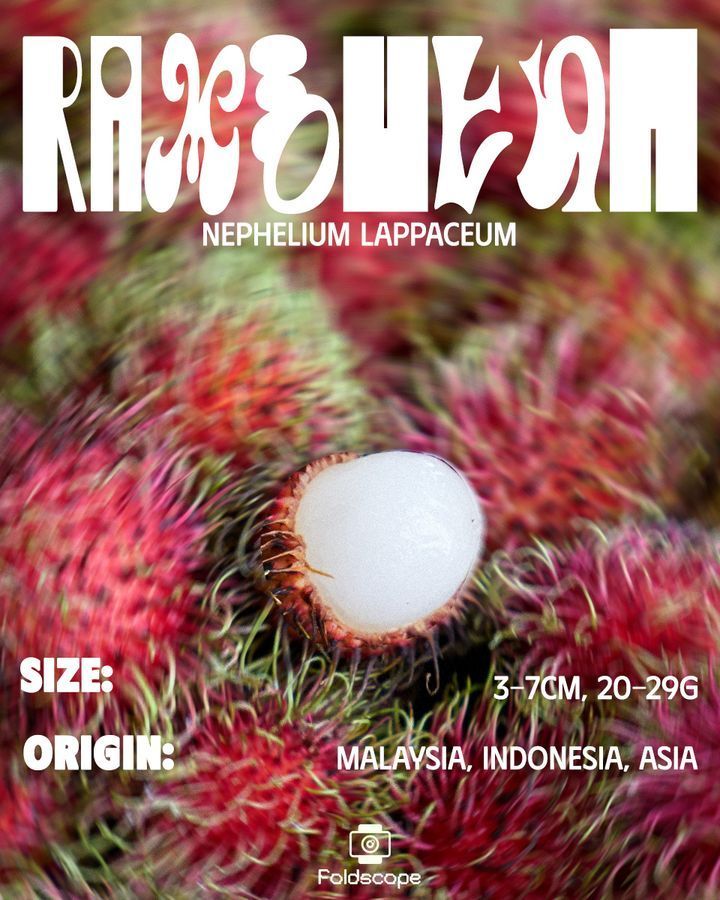
The fruit is round or oval, measuring about 3 - 7 cm long and 2 - 5 cm wide, weighing 20 - 29g each. When ripe, the thick, leathery skin turns from yellow to deep red and is covered with soft spines (the signature hairs) 0.5 - 2 cm long. The translucent flesh inside is juicy, sweet with a slight tang, and wraps tightly around a light brown seed.
Biological Features
Rambutan contains a good number of antioxidants, with particularly high levels of polyphenols in its flesh. The seeds also contain protein, fat, and various fatty acids like oleic, arachidic, and stearic acids. These can be transformed into beneficial products for both animals and humans. Studies have shown that 100g of rambutan seeds yield about 41mg of total polyphenols - compounds that play a significant role in antioxidant activity, medicine, and nutrition.
Rambutan in the Food Chain
Rambutan is dioecious - meaning male and female flowers grow on separate trees. So, some trees are entirely male and others entirely female. For fruit to grow, female flowers need to be pollinated by male ones, and this teamwork often depends on helpful creatures like bees:
Bees feed on nectar from male flowers and carry the pollen to female flowers. When pollen grains reach the pistil containing the ovary, fertilization occurs, and voila - the delicious fruits we love are formed.
Rambutan seeds are spread through animal digestion and movement.
When the fruit ripens and turns red, animals like monkeys, squirrels, and birds are drawn to it. They eat the sweet flesh and discard the seed far from the parent tree. This helps disperse the seeds and gives baby rambutan trees a chance to grow in new places, expanding the species’ range.
Biological Features
Rambutan contains a good number of antioxidants, with particularly high levels of polyphenols in its flesh. The seeds also contain protein, fat, and various fatty acids like oleic, arachidic, and stearic acids. These can be transformed into beneficial products for both animals and humans. Studies have shown that 100g of rambutan seeds yield about 41mg of total polyphenols - compounds that play a significant role in antioxidant activity, medicine, and nutrition.
Rambutan in the Food Chain
Rambutan is dioecious - meaning male and female flowers grow on separate trees. So, some trees are entirely male and others entirely female. For fruit to grow, female flowers need to be pollinated by male ones, and this teamwork often depends on helpful creatures like bees:
Bees feed on nectar from male flowers and carry the pollen to female flowers. When pollen grains reach the pistil containing the ovary, fertilization occurs, and voila - the delicious fruits we love are formed.
Rambutan seeds are spread through animal digestion and movement.
When the fruit ripens and turns red, animals like monkeys, squirrels, and birds are drawn to it. They eat the sweet flesh and discard the seed far from the parent tree. This helps disperse the seeds and gives baby rambutan trees a chance to grow in new places, expanding the species’ range.
View in Media Gallery
Rambutan in Vietnam
Environmentally, rambutan trees help prevent soil erosion, improve land quality, and support the local ecosystem - which is crucial for a farming-heavy country like Vietnam. Their deep, widespread roots hold the soil firmly during heavy rains, reducing landslides. The dense canopy acts like a natural umbrella, softening rain impact. Fallen leaves decompose into nutrient-rich humus that improves soil structure and moisture retention.
On top of that, rambutan plays a role in eco-tourism. Many orchards in southern Vietnam have become popular destinations for both local and international visitors, combining economic value with a fresh, green, and sustainable experience.
Environmentally, rambutan trees help prevent soil erosion, improve land quality, and support the local ecosystem - which is crucial for a farming-heavy country like Vietnam. Their deep, widespread roots hold the soil firmly during heavy rains, reducing landslides. The dense canopy acts like a natural umbrella, softening rain impact. Fallen leaves decompose into nutrient-rich humus that improves soil structure and moisture retention.
On top of that, rambutan plays a role in eco-tourism. Many orchards in southern Vietnam have become popular destinations for both local and international visitors, combining economic value with a fresh, green, and sustainable experience.
Sign in to commentNobody has commented yet... Share your thoughts with the author and start the discussion!
 0 Applause
 0 Comments