#LG-AUP 2026 Week-3 Day Two (Observations on 2 June 2026) Part 2 - Potato Flesh
 Jun 02, 2026 • 2:15 PM UTC
 India
India 340x Magnification
 Plants
Vismay Anup
Currently studying at Shiv Nadar School, Noida, Vismay Anup is an amateur observer and an aspiring political analyst and international relations consultant. He loves learning about and studying all sorts of organisms- whether it be microbial or not. Though starting slowly, he is excited to observe as much as possible and learn from others' findings as well. If given free rein, Vismay would be found in one of 6 places: His room, the library, the bookshop, the airport, the zoo, and the nearest bio lab.
7posts
3comments
0locations
View in Media Gallery
Hello! Let's continue where we last left off. In this post, I will be sharing my observations of a sample of Potato flesh (the inside) with a Foldscope 2.0 using all 3 magnifications. So, below were my observations.
50x
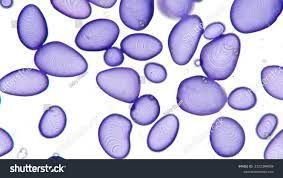
Observed very small cells packed together, forming 2-D "globule" structures (which were very round).
Certain colonies were on other parts of the slide away from the main sample (probably due to the spreading of cells when creating the sample).
Cells were transparent and showed zero colouration.
50x
Observed very small cells packed together, forming 2-D "globule" structures (which were very round).
Certain colonies were on other parts of the slide away from the main sample (probably due to the spreading of cells when creating the sample).
Cells were transparent and showed zero colouration.

View in Media Gallery
140x
Observed a boil-like, round structure of cells with some overlapping one another.
Water droplets were also observed.
In certain bigger cells, small starch granules could be observed within the cell wall. This would become more prevalent when viewing through the 340x lens.
Observed a boil-like, round structure of cells with some overlapping one another.
Water droplets were also observed.
In certain bigger cells, small starch granules could be observed within the cell wall. This would become more prevalent when viewing through the 340x lens.

View in Media Gallery
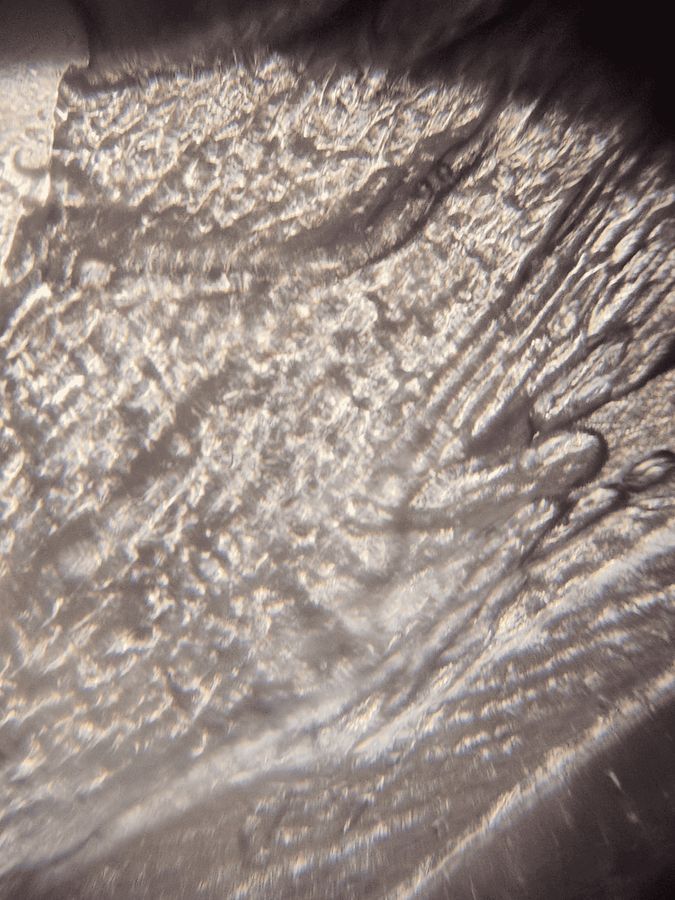
340x
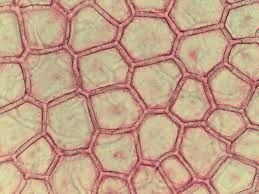
Cell walls are truly thick and even reflect some light
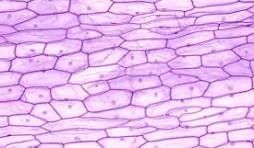
In certain cells, nuclei were observable
In almost every cell, lots of starch grains were observed (comprising the majority of all cells).
There was still a huge size variation between multiple cells.
The least amount of outside interference (water droplets, cello tape), was there in this observation.
Cell walls are truly thick and even reflect some light
In certain cells, nuclei were observable
In almost every cell, lots of starch grains were observed (comprising the majority of all cells).
There was still a huge size variation between multiple cells.
The least amount of outside interference (water droplets, cello tape), was there in this observation.


Challenges Faced
1. Creating good samples (especially for the skin) was quite hard, as it couldn't be too thick, otherwise not much would be observed due to the overlapping of cells.
2. In 340x, finding a good cluster of cells to observe and photograph was tricky, as most parts were too dark and couldn't be observed properly.
Though these challenges persisted, I found today's workshop to be very interesting and practical (as it should be), and we even got homework! Now I will be studying a tomato in the same way to observe any differences. To see those results, stay tuned!
Thanks,
Vismay
1. Creating good samples (especially for the skin) was quite hard, as it couldn't be too thick, otherwise not much would be observed due to the overlapping of cells.
2. In 340x, finding a good cluster of cells to observe and photograph was tricky, as most parts were too dark and couldn't be observed properly.
Though these challenges persisted, I found today's workshop to be very interesting and practical (as it should be), and we even got homework! Now I will be studying a tomato in the same way to observe any differences. To see those results, stay tuned!
Thanks,
Vismay
Sign in to commentNobody has commented yet... Share your thoughts with the author and start the discussion!

 0 Applause
 0 Comments
_300x300.jpeg)